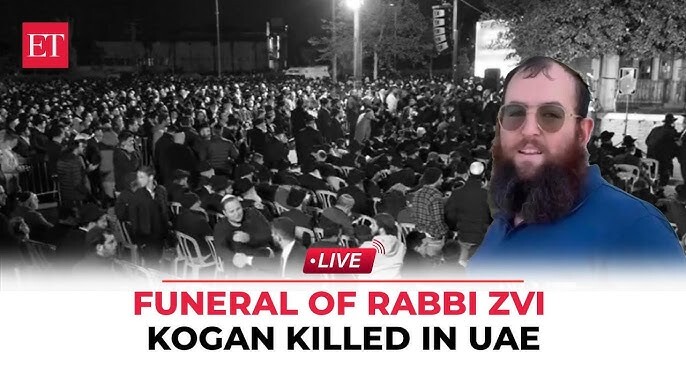
In March 2025, a shocking court verdict from Abu Dhabi made international headlines: four men were convicted for the murder of Rabbi Zvi Kogan, a Moldovan-Israeli community leader living in the United Arab Emirates. Three of them received death sentences, while the fourth was handed life imprisonment. The brutal killing of Kogan was not just a tragedy for his family and community—it became a symbol of the challenges faced by religious minorities, questions of regional security, and the complexities of Middle Eastern geopolitics.
This blog will explore the full story: who Zvi Kogan was, how the case unfolded, why it matters, and what questions remain unanswered.
Who Was Zvi Kogan?
Zvi Kogan was just 28 years old when his life was cut short. Born in Moldova and holding both Moldovan and Israeli citizenship, he had become deeply involved with Chabad-Lubavitch, the global Orthodox Jewish outreach movement. Chabad rabbis and emissaries often dedicate their lives to building Jewish communities far from traditional centers of Jewish life, and Kogan was no exception.
In the UAE, he played a central role in the country’s small but growing Jewish community. He worked as an assistant to the Chief Rabbi of the UAE and was known for running a kosher grocery store in Dubai, which served both residents and visitors. For many in the Jewish community, Kogan was not only a religious figure but also a warm, approachable presence who helped people feel at home in a new cultural landscape.
The UAE, especially since the Abraham Accords of 2020, has presented itself as a hub of religious tolerance in the Middle East. Jewish institutions—from synagogues to kosher restaurants—have slowly been growing. Within this context, Zvi Kogan’s murder was not just the death of one man; it was a blow to the sense of safety and coexistence that had been carefully cultivated.

The Disappearance :
Kogan was last seen on 21 November 2024. When he failed to appear for community obligations, concern quickly grew. His family and colleagues reported him missing, and within days, the worst fears were confirmed. His body was discovered in Al Ain, a city in Abu Dhabi emirate near the Omani border. His car and phone were found abandoned.
The discovery shocked the community. For a rabbi to be kidnapped and murdered in the UAE—one of the safest countries in the region—seemed almost unthinkable.
The Investigation and Arrests :
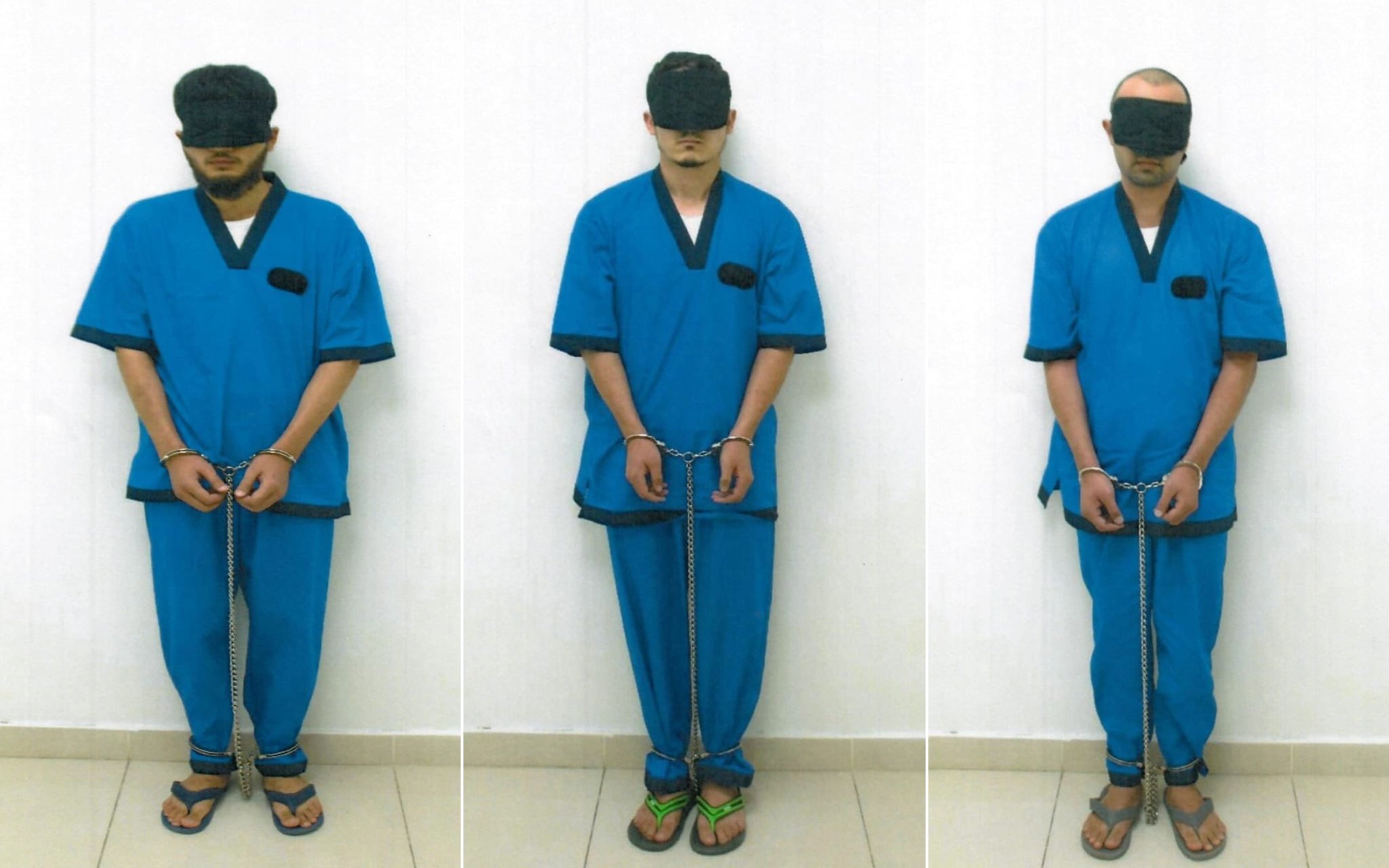
UAE authorities launched a wide-ranging investigation. Within weeks, three Uzbek nationals were identified as suspects. These men had already fled the country, but in a coordinated effort involving Turkish authorities, they were arrested in Istanbul and later extradited back to the UAE.
A fourth suspect, accused of helping to plan and facilitate the crime, was also arrested. This individual was not directly involved in the killing itself but was charged as an accomplice.
The arrests highlighted the UAE’s determination to pursue the case with speed and seriousness. In a region where cross-border crime can be difficult to address, the cooperation between the UAE and Turkey was notable.
Inside the Trial :
The trial took place before the Abu Dhabi Federal Court of Appeals’ State Security Chamber. The defendants faced charges of kidnapping and premeditated murder with terrorist intention.
Evidence presented in court included:
⦁ Confessions from the defendants, which matched other details of the case.
⦁ Forensic reports and post-mortem examinations, confirming the cause of death.
⦁ Witness testimonies and surveillance data.
⦁ Weapons and tools in the crime.
The weight of the evidence was overwhelming. By late March 2025, the court delivered its verdict:
⦁ Three defendants (the primary perpetrators) were sentenced to death.
⦁ The fourth defendant, convicted of assisting in the planning, received life imprisonment followed by deportation.
In the UAE, death sentences are not immediately final; they automatically go to the Federal Supreme Court for appeal. Nevertheless, the ruling sent a strong message that crimes of this magnitude, especially those framed as terrorism, would face the harshest penalties.
Motive: Still a Mystery :
Perhaps the most unsettling part of the case is what we don’t know. While the court described the murder as an act carried out with “terrorist intention,” it did not disclose a detailed motive.
Some Israeli officials suggested the possibility of foreign involvement, even hinting at Iranian influence, though this has not been proven. Iran, for its part, strongly denied any connection to the crime. Others have speculated that the perpetrators may have been motivated by antisemitism, given that Kogan was a visible Jewish religious leader.
Israeli Prime Minister Benjamin Netanyahu condemned the murder as an “abhorrent antisemitic terrorist act.” The wording reinforced the idea that this was more than just a criminal incident—it was seen as part of the wider global struggle against antisemitic violence.
Still, the exact reasons why Kogan was targeted remain unclear. Was it a politically motivated killing? A terrorist plot designed to intimidate Jews in the region? Or was it something more personal or complex? For now, the public record offers only partial answers.
Reactions and Impact:
The murder reverberated far beyond the UAE.
⦁ Within the Jewish community, the loss was devastating. Kogan was remembered as a kind, devoted young man who had dedicated himself to building a Jewish presence in a new land. Vigils and memorial services were held in Israel, Moldova, and the UAE.
⦁ The Israeli government took the case seriously, pressing for transparency and supporting the UAE’s investigation.
⦁ The UAE government, for its part, emphasized that justice would be done and that the country remains committed to protecting all communities. Official statements underlined the UAE’s dedication to combating terrorism and ensuring security for residents of all faiths.
⦁ Diplomatic circles watched the case closely. Since the Abraham Accords, Israel and the UAE have become partners in trade, tourism, and cultural exchange. A violent crime against a Jewish leader in the UAE could have been politically explosive—but the swift investigation and sentencing helped reassure observers that the UAE remains a safe environment.
Why This Case Matters :
On one level, this is the story of one man—Rabbi Zvi Kogan—whose life was brutally taken. But on another, it reflects larger issues:
⦁ Religious Tolerance Under Threat: The UAE has worked hard to brand itself as a tolerant, pluralistic society. A murder like this could undermine that image unless handled transparently and decisively.
⦁ Antisemitism Beyond Borders: The attack serves as a reminder that antisemitism remains a global issue, not confined to any single region.
⦁ Geopolitical Sensitivity: With Israel-UAE relations still relatively young, the case could have strained ties. Instead, the handling of the investigation and trial reinforced cooperation.
⦁ Unanswered Questions: Without a clear motive, uncertainty lingers. Was this part of a larger network, or an isolated attack? Until more is known, speculation will continue.
Conclusion :
The murder of Zvi Kogan is more than a criminal case; it is a story about faith, identity, and the fragile balance of coexistence in a rapidly changing Middle East. His death was a profound loss for the Jewish community and a painful reminder that even in places of relative safety, hatred and violence can still erupt.
The UAE’s legal system responded with some of the harshest penalties available, sending a strong signal that such crimes will not be tolerated. Yet, for all the clarity of the verdict, the case leaves behind difficult questions. Why was Zvi Kogan targeted? Who, if anyone, stood behind the killers?
As appeals move forward, the world will be watching. For now, the legacy of Zvi Kogan lives on in the community he served—and in the hope that his tragic death may inspire greater vigilance against hatred, and deeper commitment to the values of tolerance and peace.