
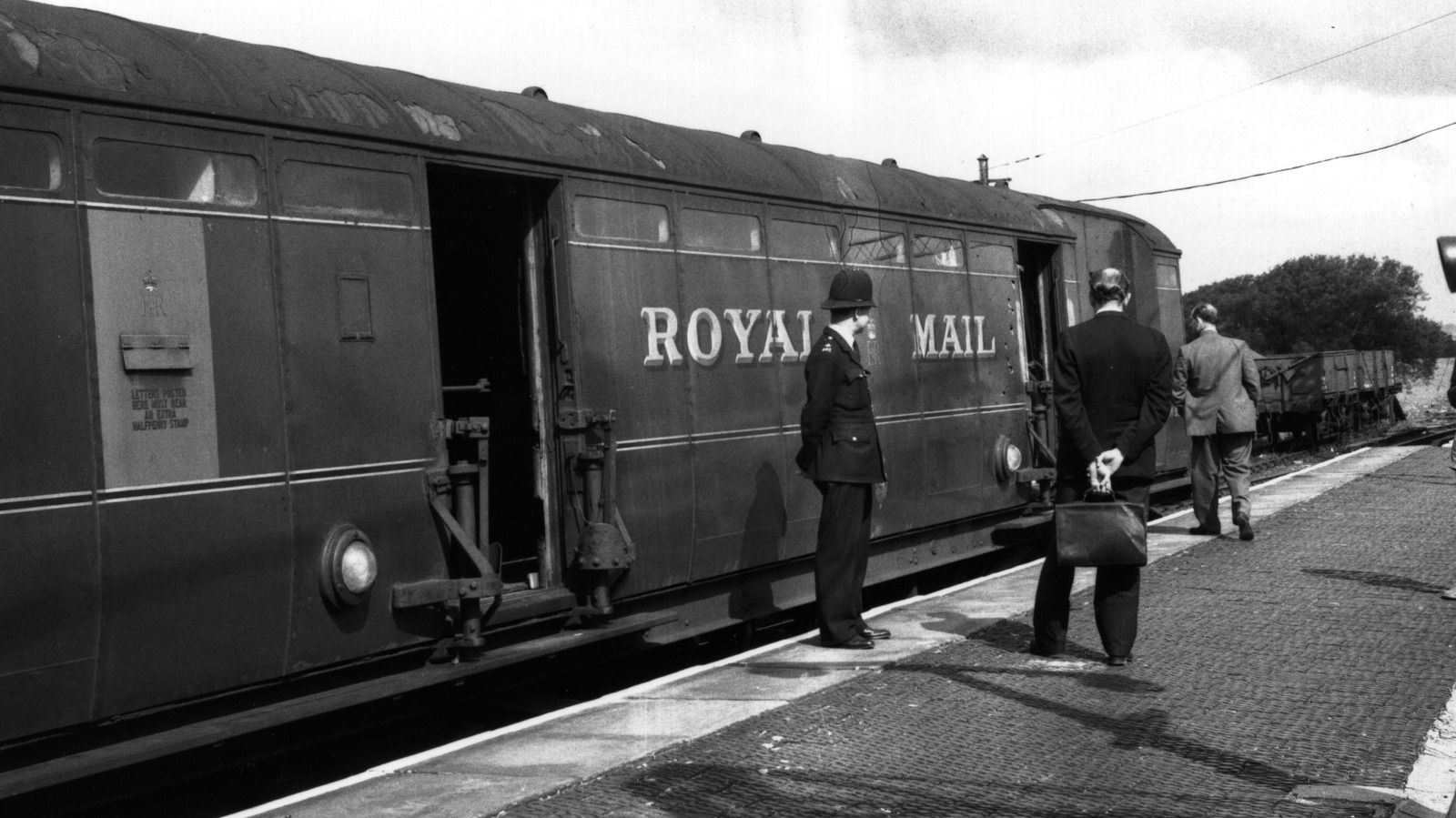
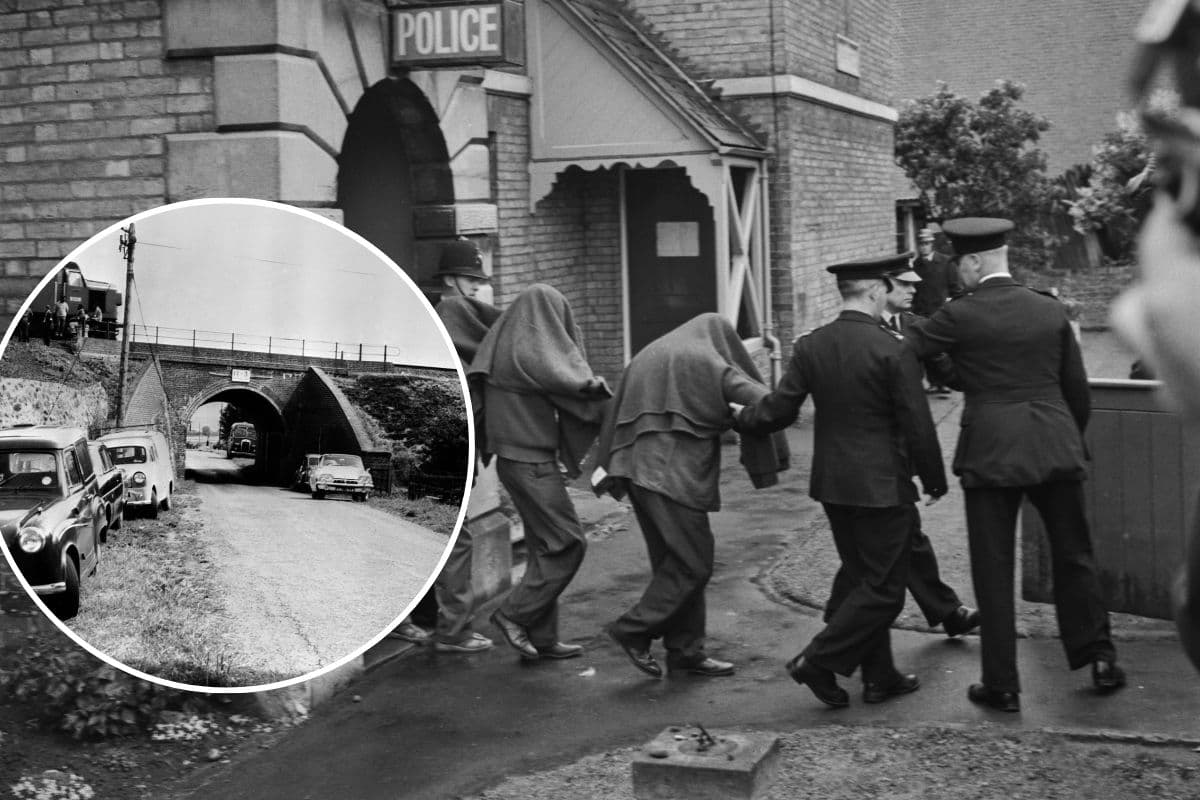
The 1963 Great Train Robbery remains one of the most audacious and legendary crimes in British history. In the early hours of 8 August 1963, a gang of 15 men led by Bruce Reynolds intercepted a Royal Mail train traveling from Glasgow to London at Bridego Bridge in Buckinghamshire. By tampering with railway signals and overpowering the train driver, Jack Mills, the gang gained access to the High Value Packages carriage and made off with £2.6 million in banknotes—equivalent to over £50 million today. While no firearms were used, the assault on Mills highlighted a growing willingness among criminals to use violence for financial gain.
The robbery captivated the public imagination. Newspapers portrayed the thieves alternately as dangerous villains and daring folk heroes. Figures such as Ronnie Biggs—who later escaped prison and fled to Brazil—became quasi-celebrities. Films, documentaries, and tabloid features glamorised the caper, portraying it less as a violent act and more as a clever heist. This sensationalised media coverage helped transform the robbery from a serious crime into a cultural myth.
A Criminal Turning Point
Criminologists often cite the Great Train Robbery as a catalyst for a shift in organised crime in Britain. During the 1950s, most robberies involved minimal violence and relatively small sums. However, following the events of 1963, law enforcement observed a notable rise in large-scale armed robberies.
Home Office statistics show that recorded robberies in England and Wales rose from around 700 annually in 1962 to over 2,500 by the mid-1970s—a more than threefold increase. A growing proportion of these offences involved firearms or imitation weapons. Police reports from the late 1960s referenced criminals explicitly citing the Great Train Robbery as proof that bold, high-reward heists were possible.
Copycats and Escalation
Several high-profile cases followed in the wake of the Great Train Robbery:
-
The Baker Street Robbery (1971): Burglars tunneled into a Lloyds Bank vault, stealing millions in cash and valuables.
-
The Security Express Robbery (1983): A violent East London heist netted £6 million, the largest cash robbery at the time.
-
The Brink’s-Mat Robbery (1983): Armed men stole £26 million in gold bullion from Heathrow Airport, an event often labeled “the crime of the century.”
These robberies demonstrated increasing sophistication, planning, and readiness to use force. Criminals began targeting security depots, payroll vans, and financial institutions, emboldened by the idea that massive sums could be secured through calculated violence.
Law Enforcement and Legislative Response
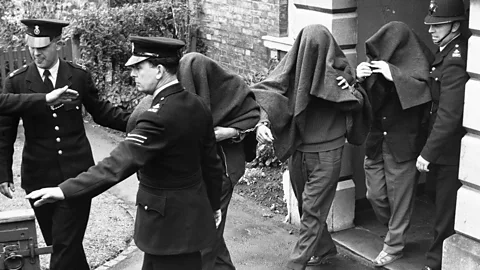
The government reacted with tougher sentencing and expanded police powers. Following the Great Train Robbery, authorities launched one of the largest manhunts in British history. Harsh prison sentences—some exceeding 30 years—were intended as a deterrent. Yet instead of reducing serious robbery, the heavy-handed response arguably contributed to the legend surrounding the perpetrators.
By the 1970s, specialist police units such as the Flying Squad focused almost exclusively on armed robbery and high-value theft. The introduction of the Firearms Act (1968) and subsequent amendments attempted to limit access to guns. Nevertheless, imitation firearms and improvised weapons continued to be used in robberies across the country.
Cultural Influence vs. Social Shift
Was the Great Train Robbery directly responsible for the rise in armed robberies—or merely symbolic of broader societal change? Many historians argue that the 1960s brought rising consumerism, loosening social norms, and expanding media coverage—all of which contributed to both criminal ambition and public fascination with outlaws. The glorification of “gentleman thieves” in cinema and tabloids blurred the line between condemnation and admiration.
However, the Great Train Robbery undeniably demonstrated that a well-organised group could humiliate the state and reap extraordinary financial rewards. Whether viewed as inspiration or warning, it set a precedent that crime at scale was achievable outside of traditional organised syndicates.
Between Legend and Lawlessness
The Great Train Robbery was more than a one-off heist—it marked a psychological turning point in British criminal history. Though not solely responsible for the rise in armed robberies, it helped shape a new era of bold, violent, and highly planned thefts. It exposed flaws in security and law enforcement while feeding a media-fuelled mythology that glamorised criminal daring.
Ultimately, the robbery sits at the crossroads of folklore and felony. It did not invent violent robbery, but it redefined it—and Britain has been reckoning with the consequences ever since.