An unprovoked shooting near the White House in Washington, D.C. has left the nation reeling. On a regular weekday afternoon, two National Guard servicemembers were ambushed — one was killed and another gravely wounded. The man accused of carrying out the attack, Rahmanullah Lakanwal, was swiftly arrested and now faces murder and multiple assault charges.
This incident has raised urgent questions about domestic security, immigration vetting, and the safety of uniformed personnel protecting public spaces.
The Incident — What Happened
On November 26, 2025, near the Farragut West Metro station — just blocks from the White House — two National Guard members were on high-visibility patrol as part of federal security deployment in Washington. Without warning, a suspected gunman emerged and opened fire.
-
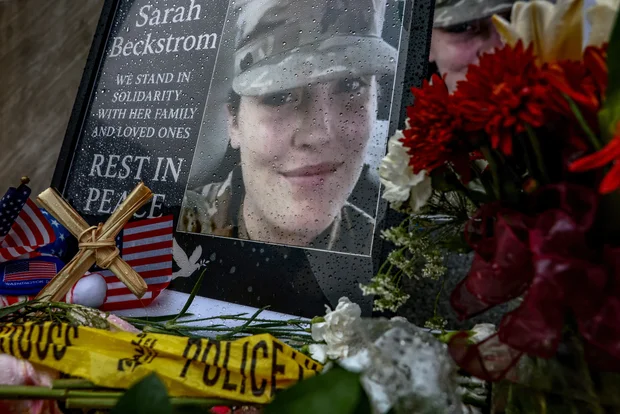
One of the guards, a young specialist, was shot at close range and later died from her wounds.
-
The second, a staff sergeant, was critically injured and remains hospitalized.
-
The attacker was shot by a responding Guard member and subdued by law enforcement after he attempted to reload his revolver.
The attack shocked not only the families of the victims but the entire nation, as it happened in broad daylight and in a heavily policed area.
The Suspect & Charges
The accused, Rahmanullah Lakanwal — originally from Afghanistan — was identified and taken into custody at the scene. He is now formally charged with first-degree murder, assault with intent to kill, and possession of a firearm during a violent crime.
During his initial court appearance, conducted from his hospital bed, Lakanwal pleaded not guilty. A judge ordered him held without bond, recognizing the seriousness and lethality of the alleged crime. The court described the evidence as “strong,” and prosecutors have indicated additional charges may be filed as the investigation continues.
Whether the crime will also face terrorism-related charges is under active investigation by federal authorities.
Broader Implications & Public Reaction
Security & Deployment Policies
The shooting has triggered immediate changes in how the National Guard deployment in Washington, D.C. is handled:
-
All Guardsmen deployed in the capital have reportedly been re-armed and now conduct joint patrols with local law enforcement.
-
The Pentagon and federal authorities have warned of elevated threats, emphasizing the need to reassess security protocols, especially in high visibility areas.
Immigration & Vetting Debate
The alleged shooter arrived in the U.S. under a refugee resettlement program for Afghans. The fact that someone previously cleared for resettlement may have carried out such an attack has intensified scrutiny over vetting procedures.
Policymakers and public voices on all sides are now debating whether resettlement and asylum protocols need stricter checks — particularly for individuals with past paramilitary or intelligence backgrounds — to balance humanitarian commitments with national security.
Impact on the Guard Community & Public Morale
The attack has deeply shaken the National Guard community: fellow servicemembers, families, and support networks are mourning the loss, while also raising concerns about their own safety on domestic deployments.
For the general public, the incident has reopened painful conversations about trust, security, and the risks faced by those tasked with protecting citizens — especially when threats can emerge unexpectedly in broad daylight.
Why This Case Matters
This tragedy stands out not only because of its brutality, but because it strikes at the heart of multiple sensitive issues:
-
The vulnerability of service members even when performing routine duty on home soil.
-
The tension between national security interests and immigration/humanitarian policies.
-
The challenges of balancing civil liberties, humane treatment of refugees, and protection of the public.
As the legal process unfolds, much attention will turn to whether the court proceedings are fair, transparent, and able to yield justice for the victims — while also addressing systemic questions that the case has raised.
What to Watch For
-
Updates on whether federal prosecutors will pursue additional charges, possibly under anti-terrorism laws.
-
Any reforms proposed to guard deployment protocols in sensitive urban centers.
-
Changes to immigration and asylum processing guidelines, especially for individuals with former military or paramilitary affiliations.
-
Broader discussions about domestic security, trust in public safety, and protection measures for law-enforcement personnel.
Final Thoughts
The shooting of National Guard members in Washington, D.C. is a grim reminder that even those entrusted with public safety can become targets — sometimes without warning. When violence reaches into the heart of a nation’s capital, the impact reverberates far beyond the immediate victims: it shakes public confidence, prompts policy reviews, and asks uncomfortable questions about protection, trust, and justice.
As this case moves forward in the courts, the hope remains that truth will come to light, justice will be served, and lessons will be learned to prevent such tragedies in the future.