
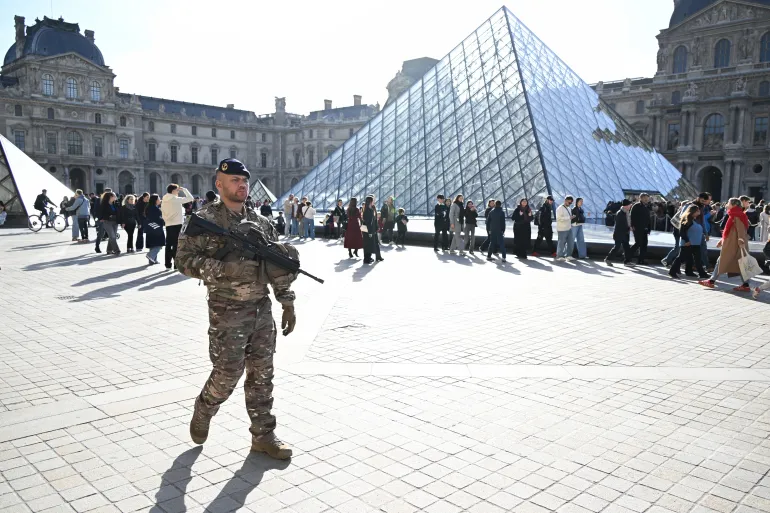
Paris, France – The world’s most visited museum, the Louvre, is once again in the headlines — not for its art exhibitions or cultural treasures, but for a bold daylight robbery that stunned France and the international art community.
Last month, a team of skilled thieves broke into the museum using power tools and made off with Napoleonic-era jewellery worth an estimated $102 million — all within just seven minutes. The heist, executed with military-like precision, has raised serious questions about the Louvre’s security systems and the protection of France’s cultural heritage.
Two New Suspects Charged
In the latest development, the Paris Public Prosecutor, Laure Beccuau, announced that two additional suspects have been formally charged in connection with the robbery.
A 37-year-old man faces charges of “theft by an organised gang” and “criminal conspiracy”, while a 38-year-old woman has been accused of acting as an accomplice. Both have been placed in custody pending further investigation, and both deny any involvement in the crime.
According to Beccuau, the male suspect was already known to law enforcement for previous theft-related offences. The woman, who resides in La Courneuve, a northern suburb of Paris, has been detained due to what prosecutors describe as a “risk of collusion” and a potential “disturbance of public order.”
Her lawyer, Adrien Sorrentino, told French media that his client is “devastated” and “does not understand how she could possibly be implicated in this case.”
So far, seven people have been arrested in total. Five were detained earlier in the week, but three were later released without charges. One of the suspects was reportedly identified through DNA evidence found at the scene.
Inside the Heist: Seven Minutes of Precision
According to investigators, the robbery was not a random act but a meticulously planned operation. The suspects are believed to have studied the museum’s layout and security routines in advance. During the heist, the thieves used industrial-grade power tools to access a secured section of the museum without triggering alarms.
They targeted a collection of Napoleonic-era jewellery — rare and priceless artefacts that once belonged to the French imperial family. Experts describe these items as not only financially valuable but culturally irreplaceable, representing a unique part of France’s royal history.
Security footage reportedly shows the suspects moving quickly and with confidence, suggesting that they knew exactly which display cases to open and how much time they had before guards could respond.
The Stolen Treasures
The stolen jewellery included pieces encrusted with diamonds, emeralds, and sapphires, believed to date back to the early 19th century. Many of the items were part of France’s national heritage, officially registered under state protection.
Art historians warn that these jewels will be extremely difficult to sell on the open market due to their recognisable craftsmanship and documented provenance. However, police fear that the thieves may attempt to dismantle or re-cut the gemstones to make them untraceable before selling them on the black market.
Louvre Management Under Pressure
In the aftermath of the theft, the Louvre’s management has come under intense scrutiny. The museum’s director publicly acknowledged security lapses and offered to resign, taking moral responsibility for the breach.
In a statement to the press, she said:
“This incident is a wake-up call. The Louvre is not just a museum — it’s a symbol of French identity. We must ensure that such a violation of our cultural heritage never happens again.”
An internal audit of the museum’s security systems has since been launched, and new protocols are being developed to prevent similar incidents in the future.
Public Reaction: Outrage and Shock
The news of the heist has sparked outrage among Parisians and the broader French public. Many have described it as “an attack on the nation’s soul.” Social media platforms have been flooded with messages demanding tougher laws to protect national treasures and stronger punishment for those involved.
The French Ministry of Culture has also announced a review of security protocols across all national museums and historical sites. The ministry stated that “the protection of cultural heritage is not just a legal obligation but a moral duty.”
A Broader Investigation: From Paris to Beyond
Investigators are now working under the assumption that the Louvre robbery may be linked to a larger organised crime network operating across Europe. Authorities have contacted Interpol and are coordinating with other European countries to monitor auction houses and private art dealers.
There are growing concerns that the stolen jewellery might already be smuggled abroad, possibly dismantled or hidden in transit. The French police have increased surveillance on known black-market networks dealing in rare artefacts and gemstones.
A Crime That Echoes Through History
Art and jewellery thefts have long fascinated the public, but the Louvre case stands out because of its boldness and symbolism. To steal from the Louvre — a global emblem of art, history, and culture — is seen by many as a challenge to the state itself.
Cultural analysts note that this event will likely trigger a major shift in museum security across Europe, where institutions are increasingly grappling with balancing public accessibility and protection of valuable collections.
What Lies Ahead
For now, the stolen treasures remain missing, and the suspects maintain their innocence. Yet the investigation continues to unfold rapidly, with French authorities determined to bring all involved to justice and recover the lost jewels.
The Louvre heist serves as a stark reminder that even in an age of advanced surveillance and security, human ingenuity — for better or worse — remains unpredictable.
Whether the jewels are ever recovered or not, this theft will be remembered as one of the most audacious crimes in modern French history, leaving an indelible mark on the world’s most famous museum and the country’s cultural conscience.