Peshawar, Pakistan — October 14, 2025:
A police officer was killed on Monday in the Matani area of Peshawar when armed assailants opened fire on a team of female health workers administering polio vaccinations to children, officials said. The attack — the latest in a long series of assaults on Pakistan’s polio eradication campaign — underscores the persistent risks faced by frontline health workers and the law enforcement personnel assigned to protect them.
The Attack
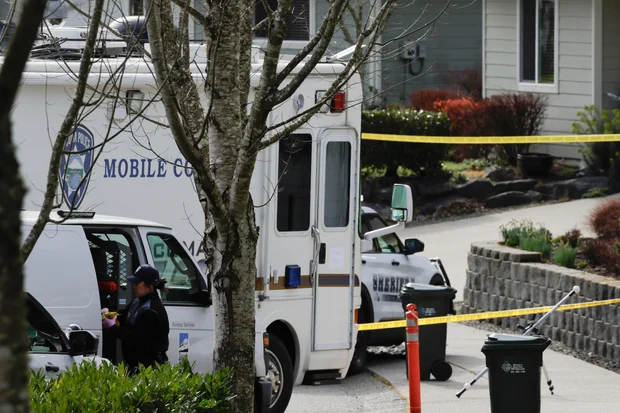
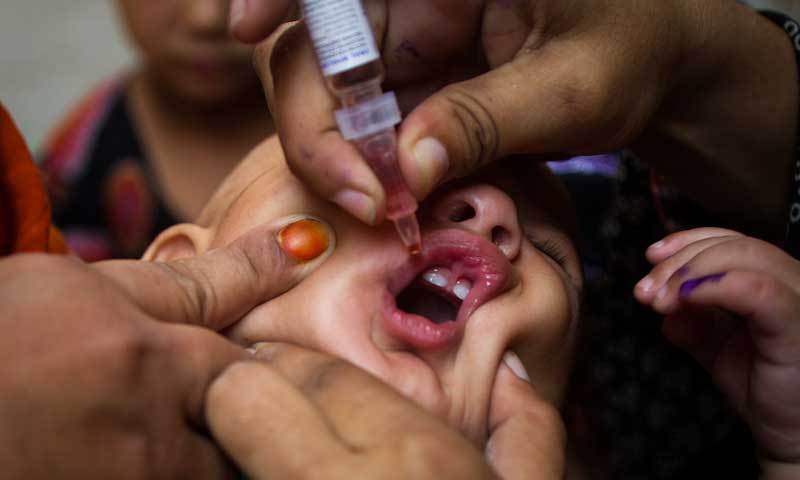
According to local police, the incident occurred shortly after 10 a.m. when a group of unidentified gunmen riding a motorcycle ambushed a polio team visiting homes to vaccinate children under five. The assailants opened fire on the security escort, hitting constable Zahid Khan, who was accompanying the female vaccinators. Khan was critically injured and later succumbed to his wounds on the way to hospital. The attackers managed to flee before reinforcements arrived.
The vaccination team — composed of two female health workers and their driver — survived the attack unhurt. Security forces immediately cordoned off the area, conducted a search operation, and launched an investigation into the incident. No group has claimed responsibility so far, though officials suspect involvement of militants linked to the Tehreek-e-Taliban Pakistan (TTP), a banned extremist organization responsible for similar past attacks on vaccination teams.
Pattern of Targeted Attacks
This attack adds to the grim tally of violence that has long haunted Pakistan’s polio eradication campaign. Militants have frequently targeted health workers and police escorts, accusing them of being agents of Western conspiracies or spies for foreign intelligence agencies.
Since 2012, at least over 100 health workers and police personnel have been killed while participating in anti-polio drives, according to official figures.
The roots of this hostility trace back to 2011, when it was revealed that a fake hepatitis vaccination drive had been used by the U.S. CIA to locate al-Qaida leader Osama bin Laden in Abbottabad. Since then, extremist groups have spread disinformation that the vaccination program is a cover for espionage or sterilization. This narrative, though false, gained traction in conservative rural areas, leading to repeated violence against medical personnel.
Government and WHO Response
The Pakistani government condemned the latest attack, calling it “a cowardly assault on humanity.” Caretaker Health Minister Dr. Nadeem Jan said the government remained committed to eradicating polio and ensuring the safety of its workers.
“This will not shake our resolve,” he said in a statement. “Our polio heroes continue to protect our children from a crippling disease. Every life lost in this mission is a national tragedy.”
The World Health Organization (WHO) and UNICEF, which jointly support Pakistan’s polio eradication efforts, expressed deep concern over the incident. In a joint statement, they urged authorities to strengthen protective measures for vaccination teams, particularly in Khyber Pakhtunkhwa (KP) province, where militant activity remains high.
Polio Situation in Pakistan
Pakistan, along with Afghanistan, is one of only two countries in the world where the wild poliovirus remains endemic. The country has made significant progress in reducing infections: reported cases fell from 147 in 2019 to just 6 in 2024.
However, health experts warn that repeated attacks on vaccination teams hinder access to vulnerable populations and risk reversing these gains. Many campaigns have to be suspended temporarily in high-risk zones following security incidents.
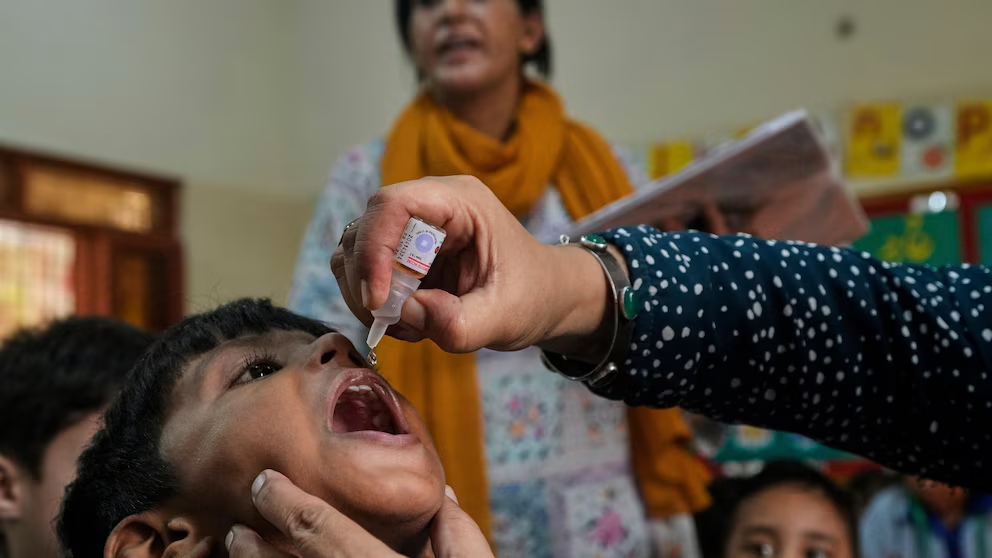
In 2025, the government launched multiple nationwide drives, aiming to vaccinate more than 44 million children. Each team typically includes two female health workers accompanied by at least one-armed police officer — a precaution that underscores the continued dangers involved.
Voices from the Ground
Colleagues of the slain officer described him as a dedicated policeman who volunteered for escort duty despite the risks. “Zahid was committed to protecting these women. He knew the danger but said, ‘If we don’t stand by them, who will?’” said one officer at Matani police station.
Local health worker Shazia Bibi, who narrowly escaped the attack, said the incident has shaken her team. “We are terrified, but we cannot stop. The children depend on us,” she said. “We just pray that the government gives us more security.”
The Broader Picture
The violence also reflects the broader deterioration of security in Khyber Pakhtunkhwa, where militant attacks have surged since the Taliban takeover of neighboring Afghanistan in 2021. Cross-border movement of fighters and weapons has emboldened local extremist factions.
Police and paramilitary forces in the province are frequent targets, with dozens of officers killed in ambushes and bombings this year alone.
Security analysts note that targeting health campaigns serves both ideological and tactical purposes for militants: it spreads fear, weakens state presence in rural areas, and undermines public-health infrastructure — a key pillar of civilian governance.
Global and Humanitarian Implications
International health organizations warn that if Pakistan fails to stop the spread of the virus, it could threaten global eradication efforts. Polio is highly contagious; even a few infections in Pakistan can endanger the worldwide goal of complete elimination.
The WHO’s regional director for the Eastern Mediterranean called the latest attack “a heartbreaking reminder that the fight against polio is not only medical, but moral and political.”
Conclusion
The killing of a police officer in Peshawar once again exposes the deadly intersection of health work and conflict in Pakistan. While the country has drastically reduced polio cases, the human cost of the campaign remains painfully high.
For the families of those who protect and deliver the vaccines, every new attack is not just a statistic — it is a personal loss, a blow to a nation’s conscience, and a reminder that courage often wears a simple uniform and carries a vaccine box rather than a weapon.