
A Heartbreaking Tragedy
A mysterious murder occurred in a silent community of Nashik in Maharashtra that shocked the whole city. A seemingly normal night ended with tragedy, as a 58-year-old man supposedly murdered his ailing 86-year-old mother, who was the center of his care until she became too dependent to take away the suffering she was enduring in silence. The case, which happened late in September of 2025, has not only brought up questions about how far humans can go, but also opened a painful discussion about how the crisis of mental health and older care has grown in Indian households.
Background Information
The defendant was known as Arvind Murlidhar Patil, and he resided in the Jail Road location in Nashik with his senior mother, Yashoda Patil. Locals said that the family was silent, outgoing, and living a humble life. Yashoda was bedridden for months because of her advanced age, which caused serious illnesses; she needed constant attention, and this included feeding, bathing, and assisting her to move around. Her only son is called Arvind, and they say he was her only caregiver.
They would find him running around getting her errands; taking her to the hospital appointments. But here, beyond the shut doors of their little house, the burden of this obligation was piling up into something grimier. The police were later informed by friends and neighbors that Arvind had been quite stressed, irritable, and socially isolated in the last few months. He was not earning a regular income and spent most of his time attending to his mother.
Although caregiving is a show of affection and responsibility, it may also be a cause of colossal emotional and psychological pressure, particularly when it is done by an individual. Lack of emotional outlets and support systems could have brought Arvind to an irreparable breaking point.
Details of the Crime
The Nashik road police version of the event caused the sad incident to occur late one night when Arvind got so exhausted and aggravated that he purportedly got his mother and smothered her to death with his hands as she slept. It was an atrocious behavior that the police claim was not planned but a consequence of emotional breakdown and desperation.
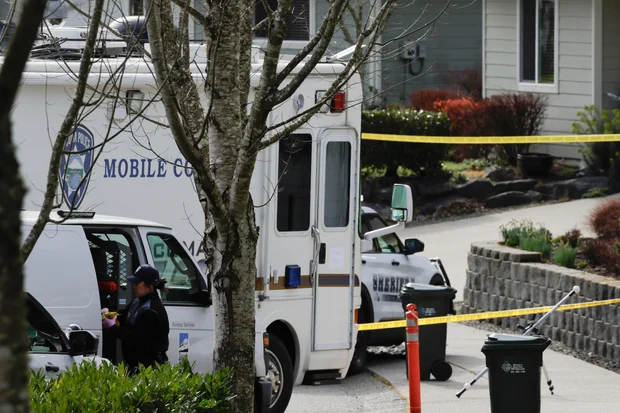
Arvind allegedly stayed behind his mother and sat beside her body hours after the act before he walked to the police station later in the night. It was there that he pleaded guilty to the offense after informing the officers that he could no longer bear it. Law enforcement personnel hurried to the location and discovered the dead body of the old woman on her bed.
Forensic specialists established that she died of asphyxiation, which was in line with the confession by the suspect. There was no evidence of forced break-in or fight, eliminating robbery and any outside interference. A couple of household goods were taken by the officers to be checked in, and a murder case was registered under Bharatiya Nyaya Sanhita (BNS): Section 302.
Legal Proceedings
After his confession, Arvind Patil was arrested and brought to a court of the Nashik magistrate. The court sent him back to the police to continue the interrogation because the investigators needed to know his mental condition and intentions.
Police officers have also noted that they might also consider subjecting the accused to a psychological assessment due to his record of stress and emotional instability. Although the offense qualifies as a serious violation in penal divisions, legal scholars opine that, in case medical tests can be done to determine mental distress or lack of responsibility, it might influence sentencing factors.
Indian law places a life sentence or even the death penalty as a lifelong penalty for murder, which is based on the nature of the offense and the conditions. There are, however, instances where the courts have been lenient in cases where extreme stress or mental health was critical in the act.
Community Reaction
The Nashik community rose with the sad news in amazement. The next morning, many citizens were standing outside the Patil home, praying and lamenting. “He loved his mother. Something like this we never thought he would do,” said a neighbor who was still a shaking creature.
Even the law enforcement officers admitted the emotional complexity of the case. One of the senior officials commented and said, It is a crime which is a result of fatigue and alienation. It is not an issue of viciousness but of disintegration.
This tragic event has led to a renewed debate in society over the issue of elder care, mental health, and the caregiving burden. Religious and social groups have since declared awareness campaigns to advocate for mental health counseling and help the caregivers of elderly parents.
Expert Opinions
Criminologists and psychologists who have been exploring the Nashik case of matricide are pointing to the phenomenon of caregiver burnout as one of the reasons that may result in mental failure.
The explanation of Dr. Meera Khanna, a Pune-based psychologist, is:
“Several caregivers are silent sufferers. They are between the obligation and hopelessness, particularly when they are not supported. In the long run, depression and hopelessness prevail. The Nashik incident, though it is a tragic case, is an indication of a systemic failure, not a single failure.”
Criminologist Ramesh Deshpande further contends that people only commit such crimes infrequently, but in extraordinary situations and when they are extremely stressed in the framework of being isolated. “It is a bad omen that families in India are altering faster than its infrastructure,” he told me.
Professionals have also pressured the government to allocate funds towards community care networks, mental health hotlines, as well as counseling care to the elderly and their caregivers.
Conclusion
The senseless murder of an 86-year-old sick mother in Nashik by her son is not just a crime story, but it is a story of suffering, loneliness, and the scream of need, which no one cared to listen to. Although justice should be done, society should also take its part in how it has been abetting emotional isolation under the closed doors.
Such tragedies can be prevented in the future by offering mental health support, empathy, and shared responsibility. All the caregivers need compassion, all the aged parents need dignified care, but neither of them should be used as a pretext to look after the person in a state of emotional breakdown.
Call to Action
This tragedy should act as a wake-up call to both families and communities, as well as policymakers. When you or a close friend is having a hard time with elder care, seek some help through mental health practitioners, local agencies, or helplines.
We should open the discussion of caregiving, mental health, and compassion. Post what you think below, or share your story, since awareness and empathy are the initial steps in the prevention of the next tragedy.