In a small but emotionally charged moment amid months of devastation, Israel released five Palestinian prisoners on Monday evening as part of an ongoing ceasefire arrangement with Hamas. The move brought rare relief to several families in Gaza — a place where joy has become intertwined with grief.
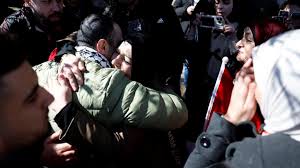
The men, released through the coordination of the International Committee of the Red Cross (ICRC), were transported to Al-Aqsa Hospital in Deir el-Balah, where they underwent medical examinations before being reunited with relatives. Outside the hospital, scenes of mixed emotion unfolded: tears, embraces, and anxious questions about those who are still missing.
For many in Gaza, this was the first tangible sign of movement since the ceasefire took effect — a faint light in an otherwise bleak landscape still scarred by war.
A Moment of Relief in a War-Weary Land
Eyewitnesses described a powerful atmosphere as the freed men arrived at the hospital. Some relatives rushed forward to hug their loved ones, while others held photographs of family members still believed to be held in Israeli prisons.
“This is the first time since the ceasefire that Israel has released prisoners whose names were not publicly announced beforehand,” a journalist in Deir el-Balah reported. That uncertainty heightened both the surprise and the tension surrounding the release.
Thousands of Palestinians remain behind bars in Israel, many under administrative detention, meaning they have been imprisoned without formal charges or trials. Human rights groups have repeatedly condemned this practice as a violation of international law and a tool of collective punishment.
The Return of the Dead
While families celebrated the return of the living, Gaza’s Ministry of Health confirmed a grim parallel reality: the receipt of 45 Palestinian bodies transferred from Israel earlier the same day through the Red Cross.
These remains are part of a larger exchange process agreed upon under the ceasefire deal, bringing the total number of bodies returned to 270. Forensic teams in Gaza have so far managed to identify 78 individuals, with the rest still undergoing medical examination and DNA testing before being returned to their families for burial.
Officials say that many of the recovered bodies bore visible signs of abuse — bound hands, blindfolds, and severe facial injuries. Some were returned without identification tags, leaving families to endure the painful process of searching for answers among the dead.
One medical worker described the scene inside the morgue: “Each body tells a story — of violence, of captivity, of suffering. It is heartbreaking to see the faces of families waiting outside, not knowing whether their loved one is among them.”
The Ceasefire Agreement and Its Fragile Balance
The exchange of prisoners and bodies forms part of the first phase of the ceasefire deal that came into effect on October 10, 2025. Mediated by Türkiye, Egypt, and Qatar, with support from the United States, the deal aims to ease hostilities, return detainees, and create conditions for longer-term peace negotiations.
Yet, despite the agreement, violence in Gaza has continued intermittently. Airstrikes and ground clashes have been reported in several areas, undermining hopes for lasting calm. Analysts say the ceasefire remains “extremely fragile,” with each side accusing the other of breaching terms.
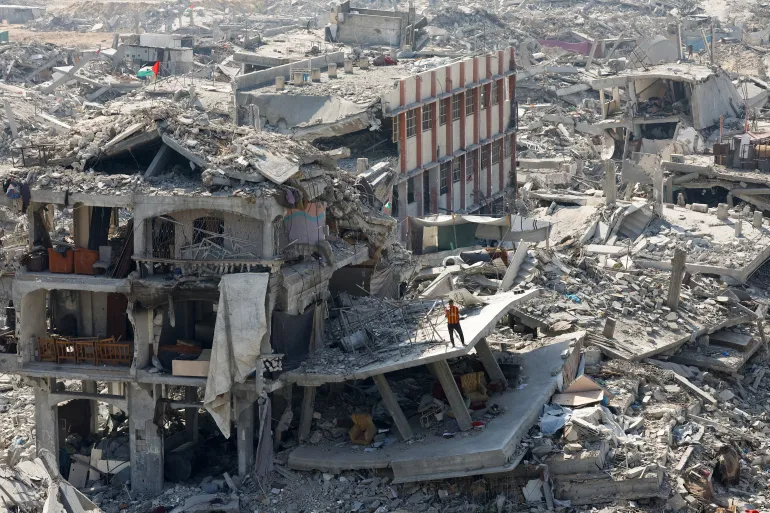
For many Palestinians, these limited releases are welcome but bittersweet. The symbolic freedom of five men cannot offset the loss of thousands of lives or the widespread destruction of homes, hospitals, and schools across Gaza.
Families Between Hope and Despair
Outside Al-Aqsa Hospital, the human cost of conflict was written on every face. Mothers clutched photographs of missing sons, children asked questions their parents couldn’t answer, and elderly relatives whispered prayers for those still unaccounted for.
A woman waiting outside the hospital summed up the collective emotion:
“We are happy for those who came back, but our hearts are still broken for the ones who didn’t. Every day we wait — for news, for names, for closure.”
For families of the dead, the return of bodies — even in such distressing conditions — at least brings a chance for burial, for dignity, and for the final goodbye that so many have been denied.
A Wider Humanitarian Crisis
Gaza’s health facilities remain overwhelmed. Medical staff are juggling between treating the wounded, conducting forensic examinations, and managing the emotional toll of mass trauma. Electricity shortages and the lack of medical supplies continue to hamper recovery efforts.
International humanitarian organizations have called for an immediate expansion of medical and psychological support, especially for families who have endured months of bombardment and displacement.
At the same time, legal experts warn that the reports of torture and abuse of detainees demand an independent investigation. They argue that accountability is essential to prevent such violations from becoming normalized in times of conflict.
Between Ceasefire and Uncertainty
The release of prisoners and the repatriation of bodies mark small but deeply symbolic steps in a much larger and painful process. Each gesture of exchange carries emotional weight — hope for the living, closure for the bereaved.
But in Gaza, hope remains fragile. The rubble of destroyed buildings still lines the streets of Gaza City, and many neighborhoods remain uninhabitable. For every family reunited, there are dozens still searching through lists of detainees or scouring hospital morgues for answers.
Peace, here, feels like a promise constantly deferred.
A Glimpse of Humanity in the Midst of Ruin
As night fell over Deir el-Balah, the released men sat quietly inside the hospital courtyard, surrounded by relatives who hadn’t seen them for years. Some smiled weakly; others simply wept. For a brief moment, amid the ruins and grief, there was something that had long been missing — a sense of humanity, fragile but real.
In a place where destruction has become routine, even a single act of reunion is enough to remind people that behind every political negotiation and military exchange lie individual lives, families, and untold stories.
The release of five prisoners may not change the course of the war, but for those who waited endlessly for their return, it means everything.