After spending over three years in Iranian custody, French citizens Cecile Kohler and Jacques Paris have finally walked free — ending a long and painful chapter of imprisonment, accusations, and high-stakes diplomacy. Their release, confirmed by French President Emmanuel Macron on Wednesday, marks a rare moment of relief in the otherwise strained relations between Tehran and Paris.
The two teachers, detained in May 2022 during what their families insist was a tourist visit to Iran, were accused by Iranian authorities of spying for France and Israel — charges both France and their relatives have vehemently denied. Despite their claims of innocence, the pair spent more than 1,277 days behind bars, including time in Evin Prison, a facility known globally for housing political prisoners and foreign detainees.
From Tourists to Prisoners
Cecile Kohler, 41, and her partner, Jacques Paris, 72, never imagined that their visit to Iran — a trip they described as cultural and educational — would turn into a nightmare. Both were educators by profession; Kohler was involved in teachers’ unions in France, and Paris, a retired teacher, shared her passion for travel and social causes.
Their arrest came at a time when Iran had already been accused of detaining foreign nationals as part of what Western governments call “hostage diplomacy” — using prisoners as bargaining chips to secure political or economic concessions. Activists say the couple’s detention fit this pattern perfectly.
For nearly three years, they were denied a transparent legal process. In October 2025, an Iranian court sentenced Kohler to 20 years and Paris to 17 years in prison, following a closed-door trial that French officials condemned as “unfair and unfounded.”
President Macron publicly denounced their imprisonment several times, calling it “an unacceptable act against French citizens who committed no crime.” Despite France’s appeals, Iran stood firm, citing “national security” reasons.
The Announcement and Emotional Relief
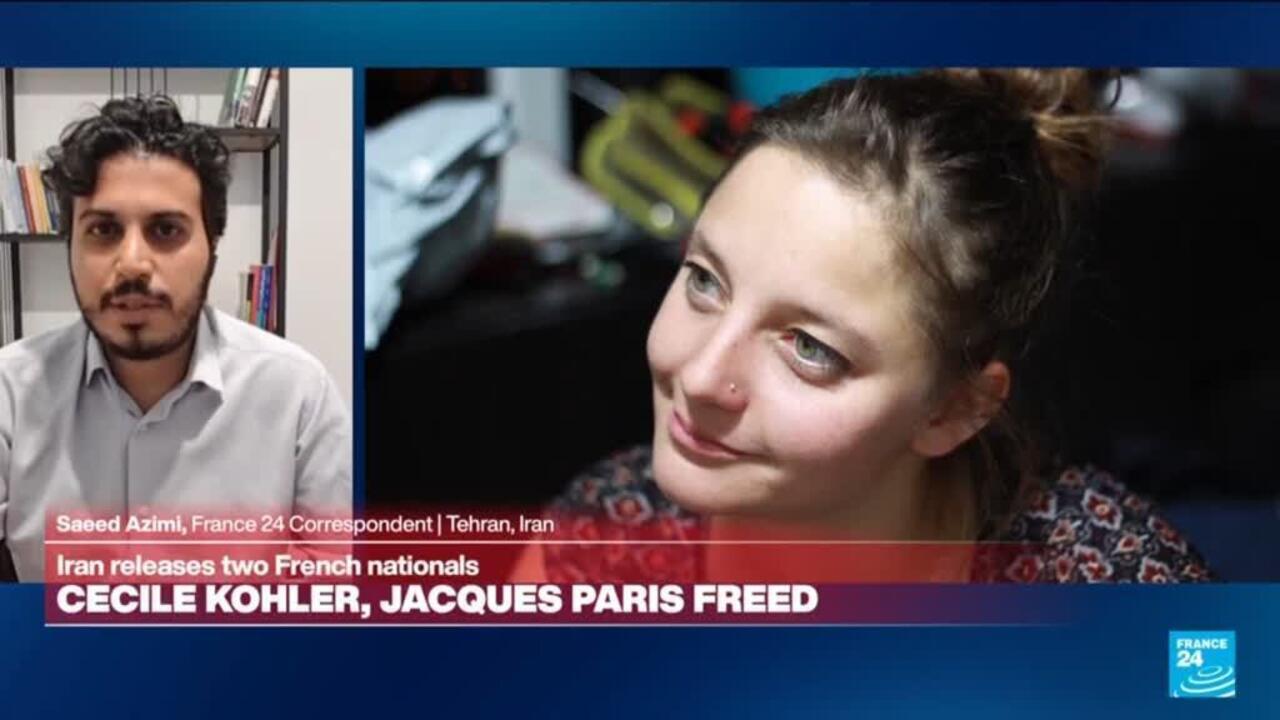
On November 5, 2025, President Macron shared the long-awaited news on X (formerly Twitter), writing, “Immense relief — Cecile Kohler and Jacques Paris have been released. They are free, and they are safe.”
He described their release as “a first step” and said that talks were under way to ensure their swift return to France. The pair were released from Evin Prison in northern Tehran and taken directly to the French Embassy, where they are under diplomatic protection and medical observation.
Their release, Macron noted, was the result of months of intense negotiation involving the French foreign ministry, back-channel diplomatic efforts, and cooperation with European allies.
According to French Foreign Minister Jean-Noel Barrot, the two are in good health and “recovering emotionally after enduring a very difficult period.” He declined to specify when they might be allowed to leave Iran, citing ongoing legal formalities.
Conditional Freedom and Ongoing Uncertainty
Iran’s Ministry of Foreign Affairs later confirmed that the release was conditional, meaning Kohler and Paris have technically not been acquitted. They were freed on bail and will remain under supervision until the next stage of judicial proceedings.
Iranian spokesperson Esmaeil Baghaei said the decision was made by the judge overseeing their case and that both individuals remain subject to further investigation. Legal experts in France have expressed concern that Tehran could still use their conditional status as diplomatic leverage in future talks.
Nonetheless, their Paris-based legal team celebrated the moment, calling it “the end of an arbitrary and unjust detention that lasted 1,277 days.”
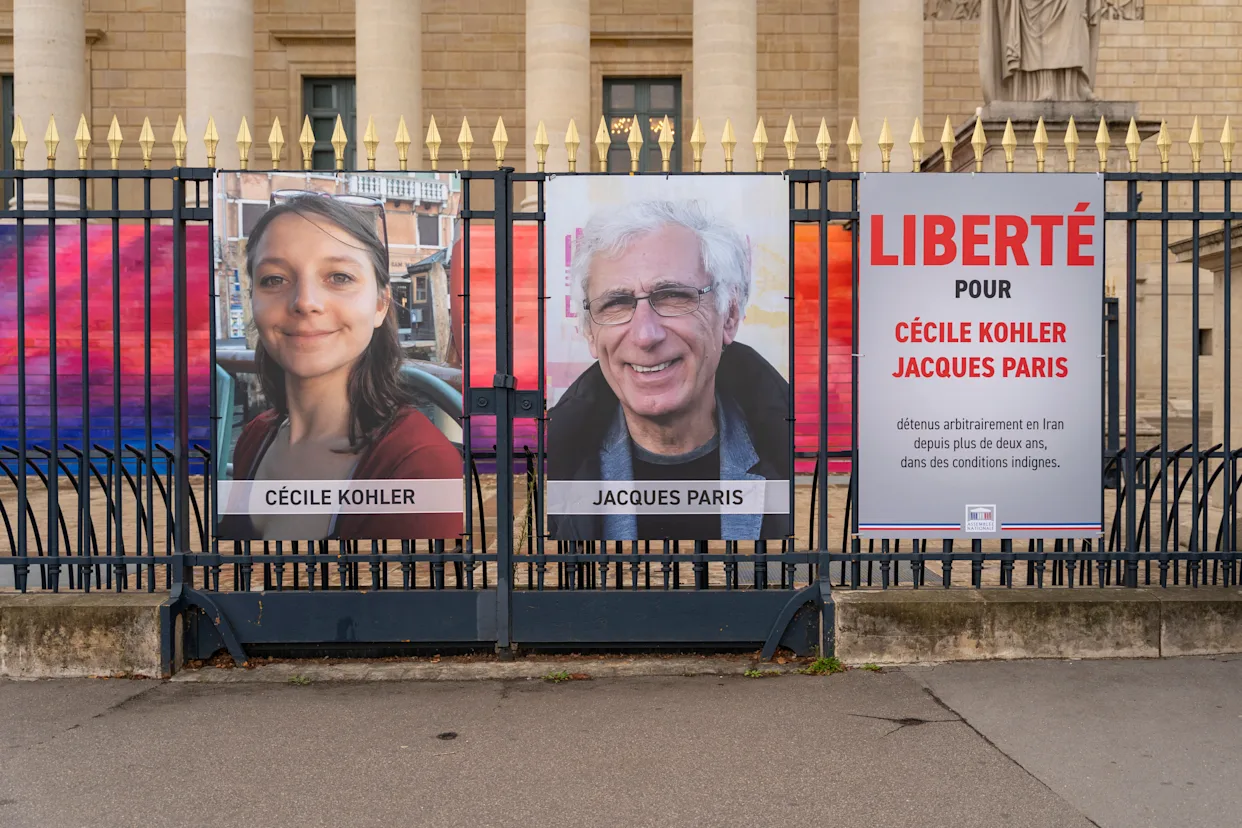
The families of both detainees, who had campaigned tirelessly for their release, described the news as “the light we have been waiting for.” Posters bearing their faces had long been displayed on the gates of the French National Assembly in Paris, symbolizing both the pain of their detention and France’s determination to bring them home.
A Sensitive Moment in Global Politics
The timing of the release is significant. It comes amid heightened tensions between Iran and Western nations, following a 12-day conflict in June between the United States, Israel, and Iran, as well as renewed United Nations sanctions on Tehran over its nuclear program.
These sanctions have deepened Iran’s economic crisis and increased domestic unrest. Analysts suggest the decision to release the French nationals could be part of Tehran’s broader effort to ease diplomatic pressure and project a more cooperative image to the international community.
Dr. Leila Moussavi, a Middle East analyst based in London, told European media, “Iran’s leadership understands that it needs small gestures of goodwill to avoid further isolation. Releasing Western prisoners — especially Europeans — can serve as a calculated step toward reopening dialogue.”
However, skeptics argue that the release may not signal genuine change. They warn that Tehran has a pattern of alternating between conciliatory gestures and hardline stances, often using detained foreigners as negotiation tools in its geopolitical strategy.
France’s Diplomatic Response
The French government has remained cautious but optimistic. Officials at the Élysée Palace emphasized that France would continue to press for the full return of both citizens to French soil and would seek guarantees that their cases are permanently closed.
Foreign Minister Barrot thanked French diplomats and humanitarian organizations for their persistence, while also reiterating France’s broader demand for the release of all foreign nationals held unjustly in Iran.
“Every human being has the right to freedom,” Barrot said during a televised interview. “Our citizens have suffered long enough. Their strength, courage, and hope have inspired all of us.”
A Long Road Home
For Kohler and Paris, freedom still feels fragile. While they are no longer behind bars, they remain technically within Iranian jurisdiction. Yet for their loved ones in France, the news brings an overwhelming sense of relief — the first glimpse of hope after years of despair.
Their story highlights not only the human cost of international diplomacy but also the growing risk faced by ordinary travelers in politically volatile regions. It also raises broader questions about the ethics of state-level detentions and the balance between justice and political negotiation.
As the French flag now flies over their temporary shelter at the embassy in Tehran, Cecile Kohler and Jacques Paris stand as living reminders of how fragile freedom can be — and how powerful global diplomacy must become to protect it.