The Domestic Helps Who Killed, Showered, and Tried to Erase Their Crime
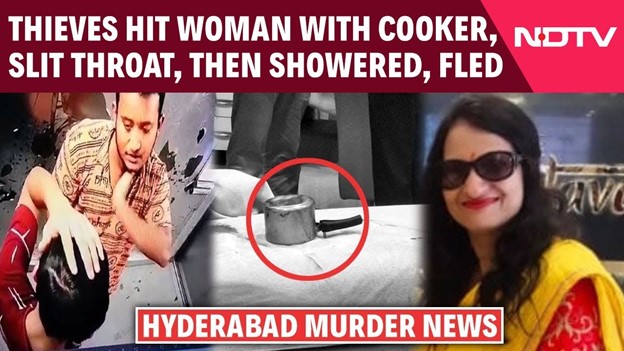
Hyderabad has seen its share of shocking crimes, but the case of Renu Agarwal’s murder in Kukatpally stands out for one unusual detail: the killers took a shower after committing the act. To ordinary people, this seemed bizarre. To investigators, it was both a clue and a miscalculation that ultimately exposed the truth.
This is the story of how two trusted domestic helps, Harsh Kumar and Roshan Singh, betrayed their employer, carried out a brutal murder, and attempted to cover their tracks—only to be caught through sharp police work and forensic science.
The Victim: Who Was Renu Agarwal?
Renu Agarwal, a 50-year-old homemaker, was known as a quiet, warm, and kind woman who lived with her family in Kukatpally, a bustling suburb of Hyderabad. She was deeply involved in her family’s day-to-day life, often managing household affairs.
But behind the walls of her home, she had two people who knew her schedule better than anyone: her domestic helps, Harsh Kumar and Roshan Singh. They had observed her routines, knew when she was alone, and were aware of her valuables. That knowledge became the foundation of a deadly conspiracy.
Why She Became a Target
Investigations revealed clear reasons why Renu was chosen:
- Insider Access – The accused had unrestricted movement inside the house.
- Valuables at Home – They believed she stored gold jewelry and money within reach.
- Perceived Weakness – At home without her husband during the day, she appeared vulnerable.
- Overconfidence – Familiarity with the family gave them misplaced courage to attempt the crime.
The betrayal of trust turned a place of safety into the stage of a brutal murder.

The Crime: Step by Step Reconstruction
Through forensic reconstruction and suspect interrogation, police pieced together the chilling sequence:
- The Entry – On the fateful day, the two men confronted Renu inside her house.
- Demand for Passwords – They pressured her to reveal her digital locker credentials.
- Torture and Violence – When she resisted, they struck her repeatedly with a pressure cooker.
- Fatal Attack – The assault escalated until she succumbed to her injuries.
- The Shower Twist – After the murder, instead of fleeing, they bizarrely took showers inside the house.
- Escape Attempt – They collected valuables, hired a taxi, and traveled nearly 1,300 km to Ranchi, believing they had escaped the law.
The Shower: A Killer’s Mistake
This detail puzzled both the public and investigators. Why would killers linger at the crime scene, increasing their risk of capture?
Experts in criminal psychology suggest three reasons:
- Forensic Erasure – They assumed that washing would remove blood, fingerprints, and hair.
- Emotional Relief – The act of bathing may have been a psychological attempt to wash away guilt and stress.
- False Confidence – They believed water could outsmart forensic science.
Instead, their showers created fresh evidence: damp towels, wet floors, soap residues, and diluted blood in the drainage—all of which gave police more material to analyze.

The Forensic Angle
Forensic experts played a major role:
- Bathroom Samples – Water from drains contained traces of diluted blood.
- Fingerprint Recovery – Smudged yet usable prints were lifted from wet surfaces.
- Footprint Evidence – Moist footprints on tiles helped establish movement patterns.
- Tool Marks – The pressure cooker, smeared with blood and hair, tied the murder weapon to the suspects.
What they thought was erased was, in fact, preserved more clearly.
Tracking the Escape: From Hyderabad to Ranchi
Despite the killers’ careful planning, police cracked the escape route within days:
- Taxi Trail – The hired taxi driver provided key testimony about their long-distance journey.
- Digital Footprints – Their mobile phones pinged towers along the highway.
- CCTV Evidence – Surveillance cameras near toll plazas captured their vehicle.
- Community Tips – Locals in Ranchi noticed suspicious behavior and tipped off authorities.
Finally, both were arrested in Ranchi and brought back to Hyderabad under judicial remand.
Who Are the Accused?
The murderers were none other than Harsh Kumar and Roshan Singh, trusted domestic workers. Investigations revealed:
- They had previous disputes with employers but no prior police record.
- They believed Renu would easily give up her valuables.
- They underestimated both her resistance and the reach of law enforcement.
Now, both sit in judicial custody, awaiting trial.
Why This Case Shocked Hyderabad
The case unsettled the community for several reasons:
- Trust Betrayed – A woman was killed by those she welcomed into her home.
- Calculated Cruelty – She was tortured for her password, not just robbed.
- Bizarre Behavior – The act of bathing post-murder was unlike anything Hyderabad police had seen before.
- Far-Flung Escape – Traveling across states showed determination, but also desperation.
Lessons for Citizens: Preventing Future Crimes
The tragedy also serves as a warning. Investigators stressed practical safety measures:
- Police Verification of Staff – Always ensure domestic helps are registered with local police.
- Smart Surveillance – Install CCTV cameras, motion sensors, and alarms at home.
- Secure Valuables – Keep jewelry and cash in bank lockers rather than at home.
- Community Vigilance – Stay connected with neighbors who can notice unusual movements.
- Emergency Preparedness – Keep helpline numbers handy and educate family members about quick responses.
Prevention is often the best defense.
Conclusion: A Crime That Couldn’t Be Washed Away
The Hyderabad case of Renu Agarwal’s murder is a chilling reminder that even ordinary homes can become crime scenes when trust is misplaced. The killers’ attempt to “wash away” their crime in the bathroom only highlighted their desperation and ignorance of forensic science.
What they left behind was not a clean slate but a trail of evidence that spoke louder than their silence.
For the family of Renu Agarwal, justice may bring closure. For society, the lesson is clear: be vigilant, verify trust, and never underestimate the power of investigation and science.