
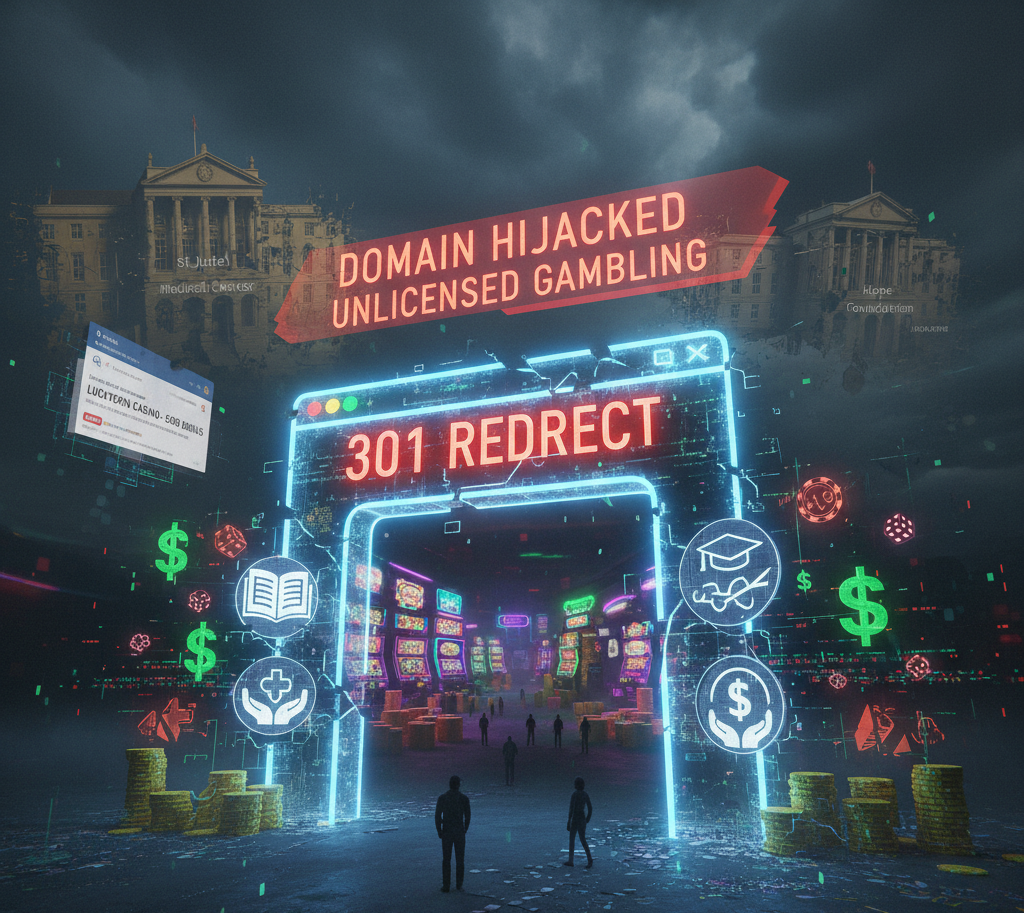
In the modern digital era, domain names are more than mere web addresses—they are valuable online assets representing credibility, trust, and authority. Hospitals, charities, educational institutions, and government organizations spend years building reputations online. Their domains are frequently referenced, linked, and ranked highly by search engines because they provide reliable information and public service. However, a growing cybercrime trend threatens this trust: these domains are increasingly being hijacked or repurposed for online gambling.
This issue goes beyond ethical concerns. It constitutes a serious form of cybercrime, deceiving users, exploiting institutional reputations, and undermining the integrity of the web. Users seeking guidance on health, education, or charitable services may unknowingly be redirected to unlicensed gambling platforms, placing them at risk of fraud, financial loss, and exposure to illegal activities.
The Crime of Domain Hijacking
Domain hijacking involves taking over expired or abandoned web domains that previously belonged to trusted institutions. Once acquired, these domains are redirected to online casinos, gambling affiliate platforms, or other unregulated gaming sites.
By leveraging the historical authority, backlinks, and trustworthiness built by the original domain, perpetrators can gain immediate visibility in search engine results. This allows them to rank for highly competitive keywords in the gambling industry without investing in legitimate content creation, SEO, or reputation-building efforts.
This practice qualifies as cybercrime for several reasons:
-
Fraud and Deception: Users searching for reliable institutional information are misled into visiting gambling websites instead.
-
Identity Hijacking: The original organization’s reputation is appropriated for commercial gain, violating trust.
-
Unlicensed Gambling Promotion: Many gambling websites promoted via these hijacked domains operate without licenses, exposing users to illegal activity and financial risk.
While not all countries have explicit laws addressing the exploitation of expired domains, broader legal frameworks regarding fraud, misrepresentation, and unauthorized use of institutional identity apply in most jurisdictions.
How Domains Are Exploited
The process is simple but highly effective, which explains its widespread occurrence:
-
Domain Acquisition: Expired domains from hospitals, charities, schools, and government institutions are purchased at minimal cost.
-
Redirection or Rebranding: Domains are either redirected via a 301 redirect to a gambling site or fully rebranded with gambling content.
-
Monetization: Operators generate revenue through affiliate marketing, casino sign-ups, bonus offers, and other gambling promotions. Reports indicate that some domains can generate up to £200,000 per month.
-
Search Engine Manipulation: Legacy domain authority allows these hijacked domains to rank quickly on search engines, even if their content is unrelated to the original purpose.
By exploiting these domains, criminals bypass the lengthy and resource-intensive process of building online authority, instead leveraging the credibility built by the original institution.
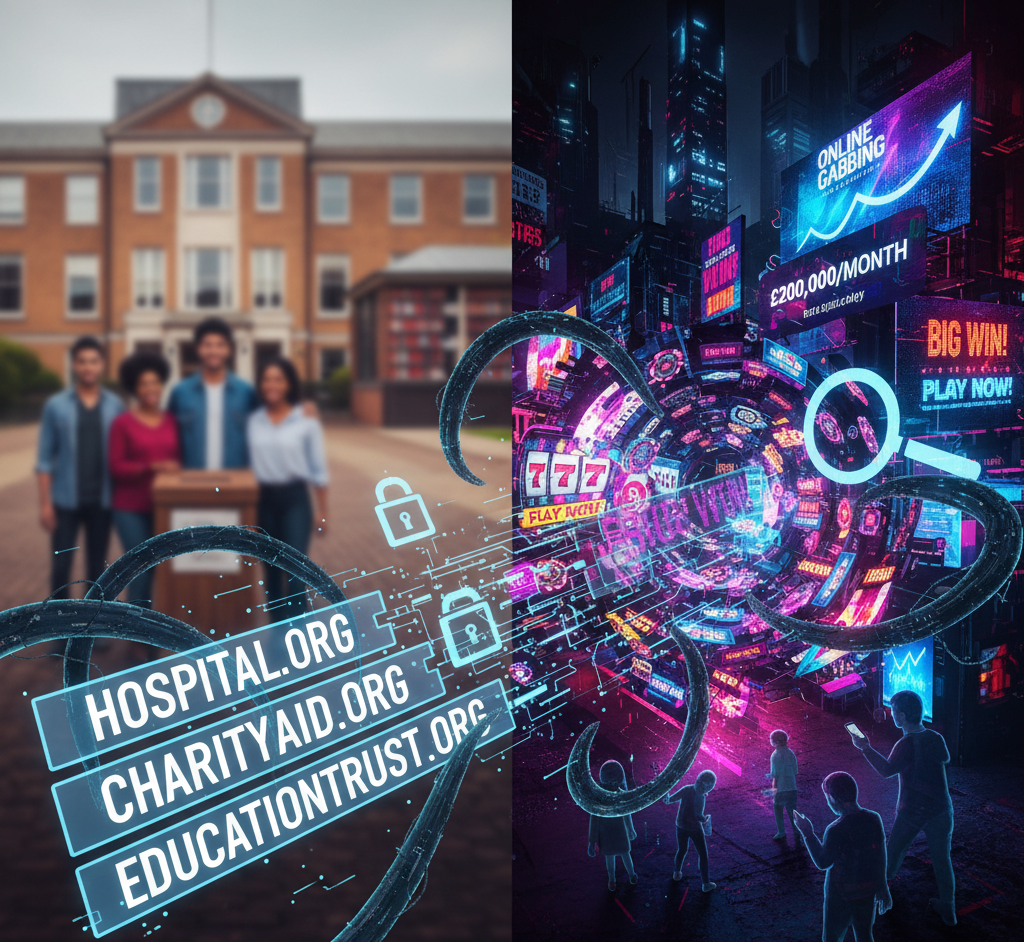
Real-World Examples of Domain Exploitation
The growing misuse of trusted domains has already affected multiple sectors—from healthcare to education and charitable work. Several notable examples have surfaced in recent months, demonstrating how cybercriminals capitalize on expired domains:
-
safecanada.ca – Formerly a Canadian public-safety and emergency-help website, this domain now redirects users to casino and betting offers. A government-aligned domain once meant for crisis information now promotes gambling.
-
vso.org.uk – Once the official site of Voluntary Service Overseas, a respected charity supporting international volunteering, this domain has been hijacked and repurposed for casino marketing, damaging the organization’s digital legacy.
-
yeovilhospital.co.uk – Previously tied to a regional hospital in the UK, the site has been transformed into a gambling portal, turning a healthcare domain into a casino entry point.
-
cliftonpark.org.uk – What used to be a family-oriented museum and children’s attraction now hosts gambling-related material, a striking contrast to its original educational mission.
-
nsbcpa.org – Once representing the National Society of Black Certified Public Accountants, this domain now links to Italian online casinos, undermining a professional organisation’s credibility.
-
elitechrysler.com – A domain previously connected to an automobile dealership now features casino reviews and promotional links, exploiting its brand recognition for commercial gain.
These examples underline the seriousness of the problem — once-trusted domains are being manipulated to serve the gambling industry, eroding years of public trust in a matter of months.
Why This Crime Persists
Several factors contribute to the ongoing exploitation of these domains:
-
Search Engine Limitations: Google and other search engines continue to heavily weigh domain history and backlink profiles, often overlooking whether the current content aligns with the original purpose.
-
Limited Oversight: Automated systems may fail to detect drastic content changes, and manual review processes are often under-resourced or slow.
-
Lack of Institutional Awareness: Many institutions fail to monitor their expired domains, leaving them open to unauthorized purchases and exploitation.
These gaps allow cybercriminals to operate with minimal risk while earning substantial profits.
Impact on Users and Institutions
The consequences of domain hijacking are far-reaching:
-
For Users: Individuals seeking medical, educational, or charitable information may inadvertently encounter gambling content, potentially losing money or being exposed to unsafe, unregulated services.
-
For Institutions: Hospitals, charities, and schools risk losing their reputational credibility. A previously trusted domain now linked to gambling can confuse or mislead the public.
-
For Online Integrity: This loophole erodes trust in the internet. Users assume that domains with a history of providing public service remain credible, but cybercriminals exploit this assumption to deceive audiences.
Real-World Examples
Many domains once used for legitimate public purposes have been repurposed as gambling portals:
-
Hospital Websites: Previously informative medical sites now redirect to online casino offers.
-
Charity Domains: Domains once dedicated to social or humanitarian causes are transformed into gambling affiliate websites.
-
Educational and Community Sites: Former school, museum, or library domains are now associated with online gambling promotions.
These examples highlight that this is not an isolated problem—it is a growing cybercrime trend affecting a variety of institutions.
Preventing Domain Exploitation
To protect against this type of cybercrime, institutions can implement several measures:
-
Monitor and Renew Domains: Ensure that all domains are renewed promptly and never allowed to expire.
-
Use Domain Locking: Enable security measures that prevent unauthorized transfers or hijacking.
-
Audit Expired Domains: Regularly check previously owned domains to ensure they are not being repurposed for illegal or harmful purposes.
-
Report Abuses: Notify law enforcement or search engines if a hijacked domain is being used for illegal gambling, fraud, or identity misappropriation.
By taking proactive measures, institutions can safeguard their reputations and prevent their digital assets from being misused.
Conclusion
The hijacking of public institution, hospital, and charity domains for online gambling is a clear example of cybercrime exploiting trust, authority, and legacy digital assets. It deceives users, undermines institutional credibility, and exposes the public to potentially illegal and harmful content.
Search engines must improve oversight to detect when a domain’s historical credibility is being misused, while institutions must take responsibility for monitoring and securing their digital assets. Protecting expired domains is critical not only for maintaining public trust but also for preventing the proliferation of illegal gambling and fraud online.
This issue underscores a dangerous intersection of technology, trust, and crime, showing that even seemingly mundane digital assets like expired domains can become powerful tools for deception and illicit profit if left unmonitored.