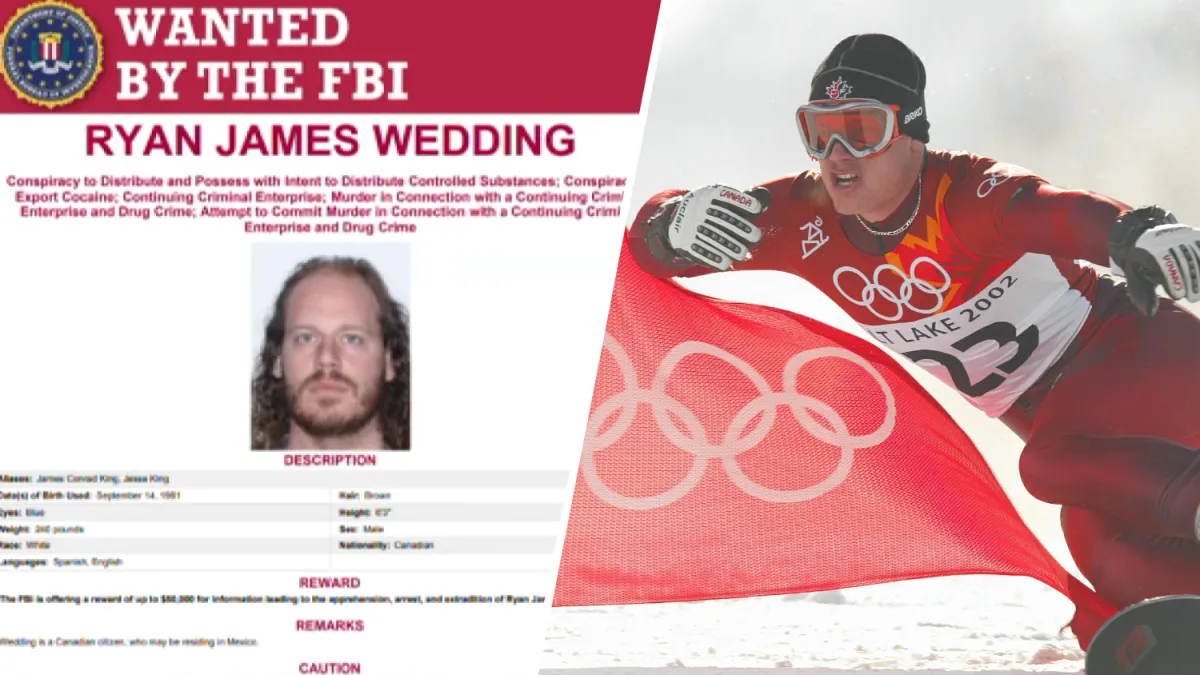
Stories of dramatic downfall often capture global attention, but few narratives are as startling as that of Ryan James Wedding—a former Olympic snowboarder who is now at the center of a major international manhunt. Once celebrated as a talented athlete representing Canada on the world’s biggest winter sports stage, Wedding has become the focus of a massive law enforcement operation due to allegations linking him to transnational drug trafficking and violent criminal activity. The United States recently raised the reward for information leading to his capture, marking a serious escalation in the case and signaling how deeply authorities view the threat posed by the alleged criminal network surrounding him.
This blogpost explores the broader implications of this unfolding story: the pressures athletes face after retirement, the dangers of organized crime evolving across borders, and how a once-promising sports figure became a symbol of modern criminal complexity.
A Promising Start That Masked a Troubling Descent
Ryan Wedding’s early years in professional sports painted a portrait of success. As a competitive snowboarder, he represented Canada in prestigious tournaments, including the Winter Olympics. Entering the Olympic world is no small feat; it requires discipline, consistent training and years of sacrifice. For many young Canadians, Wedding was a symbol of what ambition and hard work could lead to.
However, as often happens in elite sports, the transition from athlete to ordinary civilian life can be turbulent. The structure, stability and validation that sports provide can become difficult to replace. Some retired athletes struggle with financial instability, identity crises or psychological stress once the cheering stops and the spotlight fades.
While these challenges alone cannot explain or justify criminal behavior, they form part of a larger social conversation. Wedding’s dramatic shift—from athlete to a figure accused of playing a major role in international drug networks—illustrates how personal struggles can sometimes intersect with dangerous opportunities.
Allegations of a Criminal Empire
Authorities allege that Wedding’s descent into crime was neither accidental nor minor. They describe his involvement as central to a sophisticated drug distribution network believed to traffic large quantities of narcotics across North America. According to investigators, this network operated through multiple layers of intermediaries and used advanced methods to evade law enforcement.
The allegations suggest Wedding had ties with foreign cartels known for high-volume drug distribution. His position, if proven true, would mean he played a substantial role in coordinating routes, managing finances and executing strategies that allowed illegal substances to move between countries.
These accusations elevate the case beyond a simple legal issue. They underscore how drug trafficking organizations are evolving, relying on diverse individuals—including former athletes, businesspeople and professionals—to manage operations that transcend borders.
A Major Breakthrough: Arrests in Canada
In a carefully coordinated joint operation, law enforcement agencies from Canada and the United States conducted extensive raids, ultimately arresting several individuals allegedly connected to Wedding’s network. This operation involved months of intelligence work, surveillance and cooperation between agencies, highlighting the complexity of dismantling modern criminal networks.
Among those detained was a Canadian lawyer accused of aiding the operation by obstructing investigations and interfering with witnesses. Accusations against him suggest he played a role that extended far beyond legal counsel—potentially serving as a conduit for messages meant to intimidate or silence individuals who could compromise the network.
These arrests marked a critical turning point in the case. They provided investigators with valuable information and demonstrated that the alleged network had infiltrated professional sectors in ways that complicated enforcement efforts.
Why the Reward Increase Matters
The U.S. government’s choice to dramatically increase the reward for information about Wedding’s whereabouts is not a routine action. Such a decision reflects the level of concern surrounding his activities and the potential threat authorities believe he represents.
Increasing a reward to such a high value has several implications:
1. Heightened Public Awareness
It signals that the search is urgent. The public becomes more attentive, and individuals who may have otherwise stayed silent may consider sharing any relevant information.
2. Seriousness of Allegations
Only high-profile or high-threat individuals typically see such large reward amounts offered. This places Wedding among the most sought-after fugitives in North America.
3. A Warning to Organized Crime
Such actions send a message to criminal organizations that law enforcement will allocate significant resources to pursue cases involving transnational smuggling operations.
Still, offering a major reward also comes with responsibility. Authorities must ensure that information provided is credible, lawful and verified before any action is taken.
A Cautionary Tale for Athletes and Society
As the investigation continues, one cannot ignore the broader lessons embedded in this story. Wedding’s fall from an Olympic athlete to an internationally wanted fugitive highlights several important issues:
1. Post-Career Athlete Support Needs Strengthening
The transition from sports to civilian life can be abrupt and traumatic. Many athletes lose not only financial security but also the identity they have carried for years. Without proper guidance, this can leave them vulnerable to negative influences.
2. Organized Crime Is More Complex Than Ever
Gone are the days when drug trafficking was isolated to stereotypical images. Today, criminal networks often involve individuals from respected professions who can provide legal, financial or logistical expertise.
3. Community Impact Cannot Be Ignored
Drug trafficking does not harm only those directly involved—it affects communities, fuels violence and puts pressure on public health and safety systems.
An Unfinished Story
The search for Ryan Wedding continues, and each development adds to a story that has shocked sports circles and captured international media attention. The case remains a stark reminder that success in one part of life does not guarantee stability in another, and that crime’s reach can extend into unexpected places.
As this investigation progresses, one thing is clear: this is more than a story about one person’s downfall. It is a window into the evolving nature of organized crime, the vulnerabilities faced by public figures and the necessity of international cooperation to protect communities.