Dubai money laundering
In one of Dubai’s most talked-about legal sagas, Balvinder Singh Sahni, popularly known as Abu Sabah, has been handed a five-year prison sentence for his role in a large-scale money laundering operation. Once hailed as a self-made billionaire with an eye for grandeur, Sahni’s downfall has stunned both the local and international business community. Along with imprisonment, he faces hefty fines, deportation, and asset seizures, drawing the curtain on a story that once epitomized luxury and ambition in the UAE.
Who is Abu Sabah?
The nickname “Abu Sabah” comes from a traditional Arab naming custom—he was often referred to as the “father of Sabah,” his eldest son. Born in Kuwait in 1972 to an affluent Indian family, Sahni enjoyed a privileged upbringing but was driven by a strong entrepreneurial streak.
At just 18 years old, with his father’s backing, he launched a company in Kuwait dealing in car parts and tyres. The venture laid the foundation of his fortune and nurtured his appetite for high-risk, high-reward business ventures.
In 2006, Sahni relocated to Dubai, setting up the RSG Group of Companies, which soon became a recognized player in real estate and hospitality. Through projects like Qasr Sabah and Burj Sabah, as well as premium serviced apartments, he carved a niche in the city’s competitive property market. Over time, RSG expanded into South Asia, the Middle East, and the United.
Fame, Fortune, and Flash
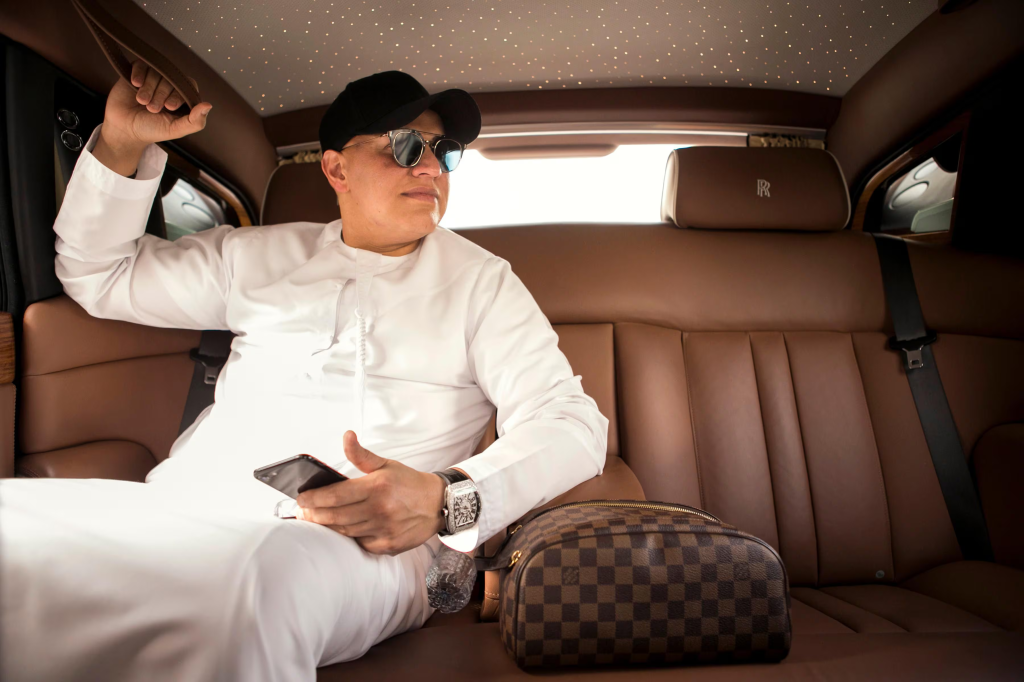
While his business acumen contributed to his rise, it was Sahni’s extravagant lifestyle that made him a household name.
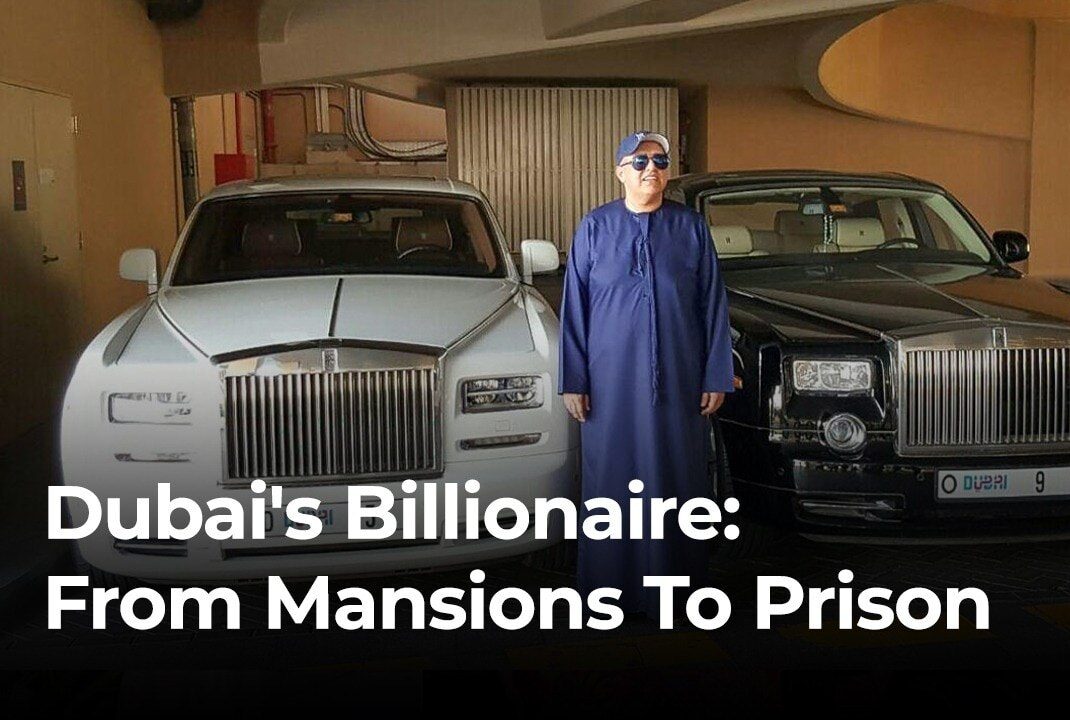
⦁ In 2016, he shocked the world by paying AED 33 million (USD 9 million) for Dubai’s coveted single-digit license plate number “5.” The plate adorned his Rolls-Royce and instantly made global headlines.
⦁ His garage included not just Rolls-Royces, but also a Bugatti Chiron and other supercars.
⦁ His Palm Jumeirah mansion became legendary, with gold-plated interiors and lavish parties that drew celebrities, tycoons, and influencers.
Interestingly, Sahni’s public image wasn’t only about wealth—it was also steeped in symbolism and superstition. For instance, he placed a black Bugatti in the center of his living room as a charm against the “evil eye,” despite admitting he disliked black cars.
His obsession with rare license plates also grew out of an incident at a luxury hotel. Denied entry because he didn’t own a two-digit plate, he reportedly bought three plates the very next day, sparking a lifelong fascination that saw him amass a collection valued higher than the cars themselves.
The Beginning of the End
Trouble started surfacing in early 2024, when reports of unpaid bank loans—around $27 million—emerged. But the real storm arrived later that year when Dubai Police referred a wide-ranging money laundering case to prosecutors.
Court documents reveal a network of shell companies, forged business contracts, and suspicious financial transfers both inside and outside the UAE. The scheme allegedly laundered AED 150 million (USD 41 million).
On January 9, 2025, the case was officially heard in Dubai’s Fourth Criminal Court, and just months later, Sahni was convicted.
The Verdict
Singh Sahni to five years in prison, fined him AED 500,000, and ordered the confiscation of AED 150 million in assets. Deportation will follow upon completion of his sentence.
He wasn’t alone—his son and 32 others were also convicted. Some received lighter punishments, including one-year sentences and fines of AED 200,000. In addition, three companies tied to the network were slapped with massive fines of AED 50 million each.
The UAE authorities described the investigation as one of the most significant financial crime crackdowns in recent years, citing “forged partnerships, fake commercial activity, and illicit dealings with foreign entities.”
Sahni’s Business Philosophy
Despite his flamboyance, Sahni often portrayed himself as a calculated businessman. In interviews, he said:
“Whenever I make big money, I buy a building.”
One of his favorite properties was in Business Bay, which he reportedly visited weekly. He believed in Dubai’s long-term potential, frequently expressing admiration for the government’s vision, especially after Expo 2020.
His mantra of “sustainable growth” contrasted sharply with the charges that ultimately brought him down, making his story even more ironic.
Impact on RSG Group
With Sahni behind bars, the future of RSG Group hangs in the balance. The company had lined up ambitious projects, including the Sabah Rotana Hotels, but it is now under scrutiny. Regulators are likely probing its financing and ownership structures. Industry watchers suggest restructuring—or even asset sales—may be necessary to salvage the group’s operations.
A Symbolic Downfall
Sahni’s conviction is more than just the story of one billionaire’s fall—it’s a signal to Dubai’s business community. The UAE has doubled down on its anti-money laundering (AML) regulations, determined to protect its reputation as a safe and transparent global hub.
For entrepreneurs and investors, the message is clear: compliance is non-negotiable, no matter how wealthy or influential you may be.
The image of Sahni’s Bugatti Chiron—once parked proudly in his gilded mansion to ward off misfortune—now stands as an ironic metaphor. Wealth, superstition, and symbols of status cannot shield one from accountability.
Legacy and Lessons
Balvinder Singh Sahni’s journey is a classic rise-and-fall narrative: from a young Kuwaiti entrepreneur selling tyres, to a Dubai billionaire with billions in assets, to a convicted felon stripped of freedom and reputation.
For the UAE, the case underscores a firm stance on financial crime. For the global business community, it is a reminder that legitimacy and transparency must form the bedrock of success.
As Sahni begins his prison term, his own words echo hauntingly:
“I have one passion—making money.”
That passion, unchecked by the boundaries of law, has cost him the very empire he spent a lifetime building.