
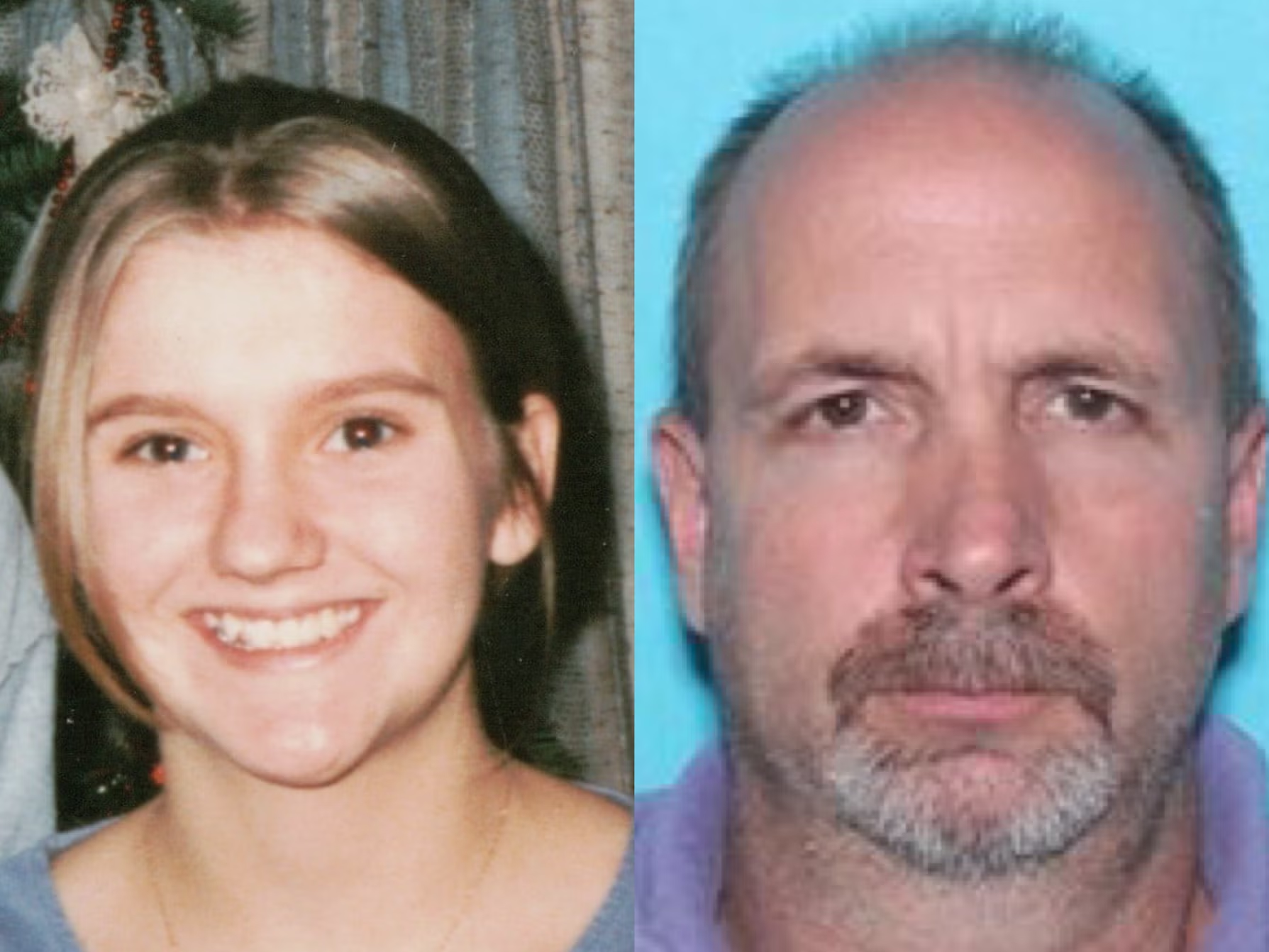
The story of Danielle “Danni” Houchins is a heartbreaking example of a life tragically cut short, a family’s decades-long search for answers, and the relentless pursuit of justice by investigators determined to uncover the truth. For nearly 28 years, Danni’s disappearance and death remained an unsolved mystery, leaving a small Montana community in shock and a family grappling with grief. The recent breakthrough in this decades-old cold case highlights the power of modern forensic science and the resilience of those committed to seeking justice.
A Day That Turned Tragic
On September 21, 1996, 15-year-old Danni Houchins set out for what should have been a routine day. She went to a local fishing area near the Gallatin River in Montana, a place she enjoyed for its tranquility and natural beauty. Hours later, when she failed to return home, her family grew alarmed. A search of the area revealed her abandoned vehicle, parked near the river access. Inside the truck, her personal items such as her keys and a water bottle were found untouched, a troubling sign that something was amiss.
Later that evening, Danni’s body was discovered in a nearby swampy area. She was lying face down in shallow water, surrounded by mud and reeds. At the time, authorities believed her death may have been an accident, but the circumstances left many unanswered questions. How could a healthy, active teenager end up in such a dangerous situation in a seemingly safe location?
The Initial Investigation
The early investigation focused on the possibility of an accidental drowning. The autopsy report indicated that Danni had taken in water and mud, but the exact cause of her death remained unclear, with no clear evidence of injury or deliberate harm and without clear evidence of a crime, the case went cold.
Despite the lack of immediate answers, local law enforcement maintained the files, preserving all evidence collected at the scene. Friends, family, and community members questioned the circumstances surrounding her death, but for years, the case remained unresolved. For Danni’s loved ones, the uncertainty created an enduring emotional burden.
Modern Technology Offers a Breakthrough
Decades later, advances in forensic science provided a new opportunity to revisit the case. Investigators re-examined evidence from 1996, including biological material that had been preserved. Using modern DNA sequencing and genealogical techniques, experts were able to create a suspect profile that was previously impossible to obtain.
The breakthrough came when the DNA matched Paul Hutchinson, a Montana resident with no prior criminal record who had lived a seemingly ordinary life. Hutchinson, a married father and a long-time employee with the Bureau of Land Management, had never been publicly linked to criminal activity, making the revelation all the more shocking.
The Final Confrontation and Tragic Outcome
In July 2024, investigators interviewed Hutchinson, presenting evidence and seeking his cooperation. According to reports, he displayed visible signs of distress and nervousness throughout the session. Less than 12 hours after the interview, Hutchinson died by suicide. Subsequent DNA analysis confirmed a full match between Hutchinson and the evidence collected from Danni’s body, effectively identifying him as her killer.
This confirmation brought clarity but not closure in the traditional legal sense. Hutchinson’s death meant that there would be no trial or conviction, leaving the formal justice system unable to deliver a verdict. However, for investigators and Danni’s family, it provided long-sought answers and validated decades of hope that the truth could eventually come to light.
The Family’s Enduring Strength
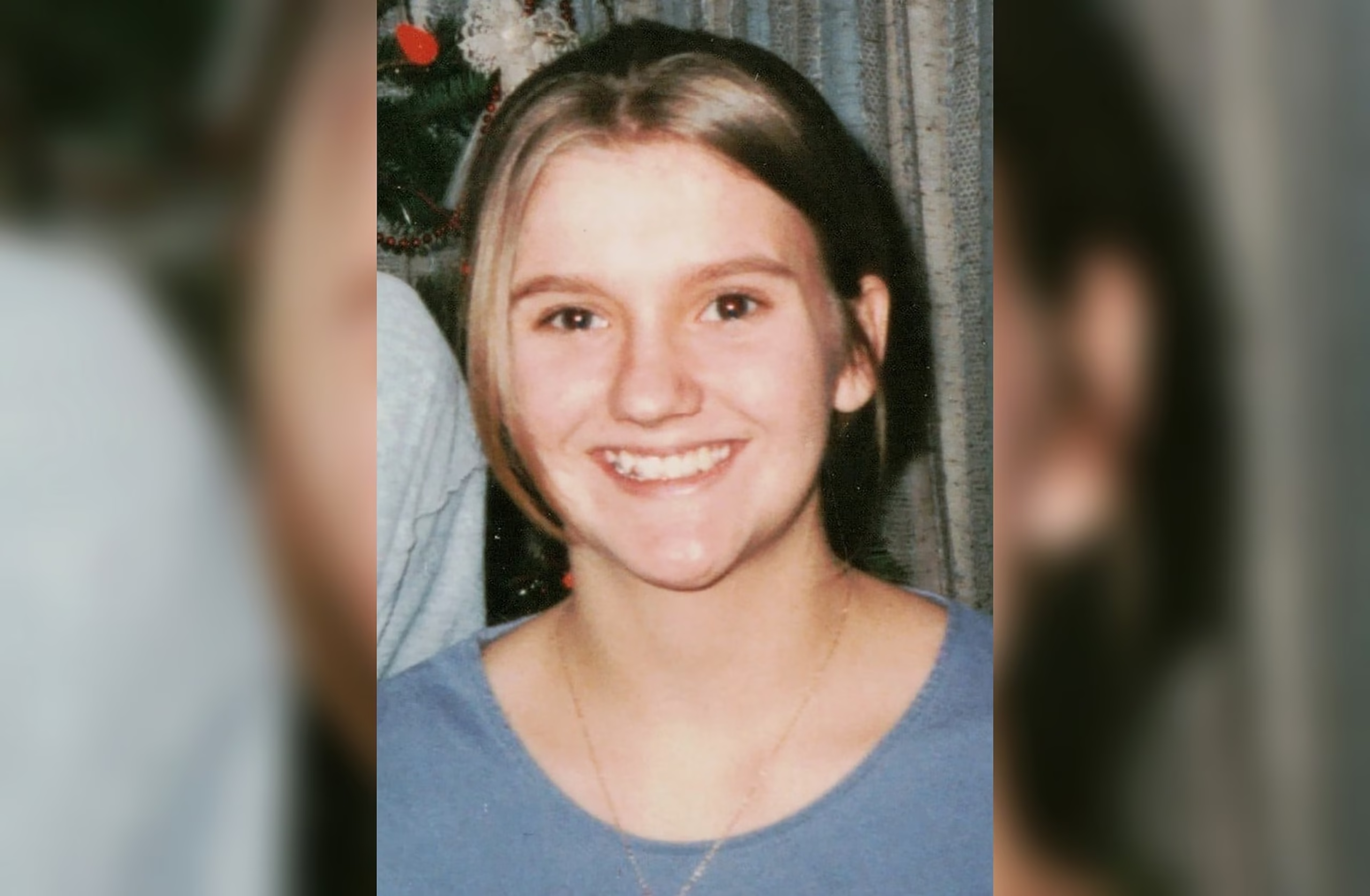
For nearly three decades, Danni’s family, particularly her sister Stephanie Mollet, carried the weight of unanswered questions. The uncertainty surrounding her death was a source of ongoing grief and frustration. Yet, their perseverance and willingness to support renewed investigations were crucial in ensuring that the case remained active and that no leads were left unexplored.
The Houchins family’s story demonstrates the importance of advocacy, persistence, and faith in the investigative process. Their unwavering dedication contributed directly to bringing a decades-old mystery to a conclusion, even if justice could not be served in court.
Lessons From the Case
The Danielle Houchins case offers several key lessons for communities, law enforcement, and the broader public:
-
The Importance of Preserving Evidence: Properly collected and stored evidence can yield results even decades later, especially as forensic technology advances.
-
The Power of Modern DNA Analysis: Genealogical DNA techniques and sequencing are revolutionizing cold case investigations, enabling identification of suspects once thought impossible to trace.
-
The Role of Persistence in Justice: Families and investigators who maintain pressure and advocacy can ensure that cases are never truly forgotten.
-
The Limits of Closure: Even when a case is “solved,” the tragic realities of loss remain, underscoring the need for continued emotional and community support for victims’ families.
Broader Implications
This case highlights a broader trend in criminal investigations: cold cases can be solved with patience, technological innovation, and meticulous review. Across the United States, similar approaches are being used to reopen unsolved murders, missing persons cases, and sexual assault investigations, providing hope to families who have been waiting for years or even decades.
Conclusion
The story of Danielle Houchins is one of loss, resilience, and the relentless pursuit of truth. While her life was tragically cut short, the decades-long search for answers demonstrates the enduring impact of family advocacy, diligent law enforcement, and advancements in forensic science.
Although the suspect will never face trial due to his untimely death, the identification of Paul Hutchinson brings long-awaited answers to a case that left an entire community in shock. The resolution reminds us that even in the darkest of circumstances, persistence, technology, and dedication can bring clarity, justice, and some measure of closure to those who have suffered unimaginable loss.