
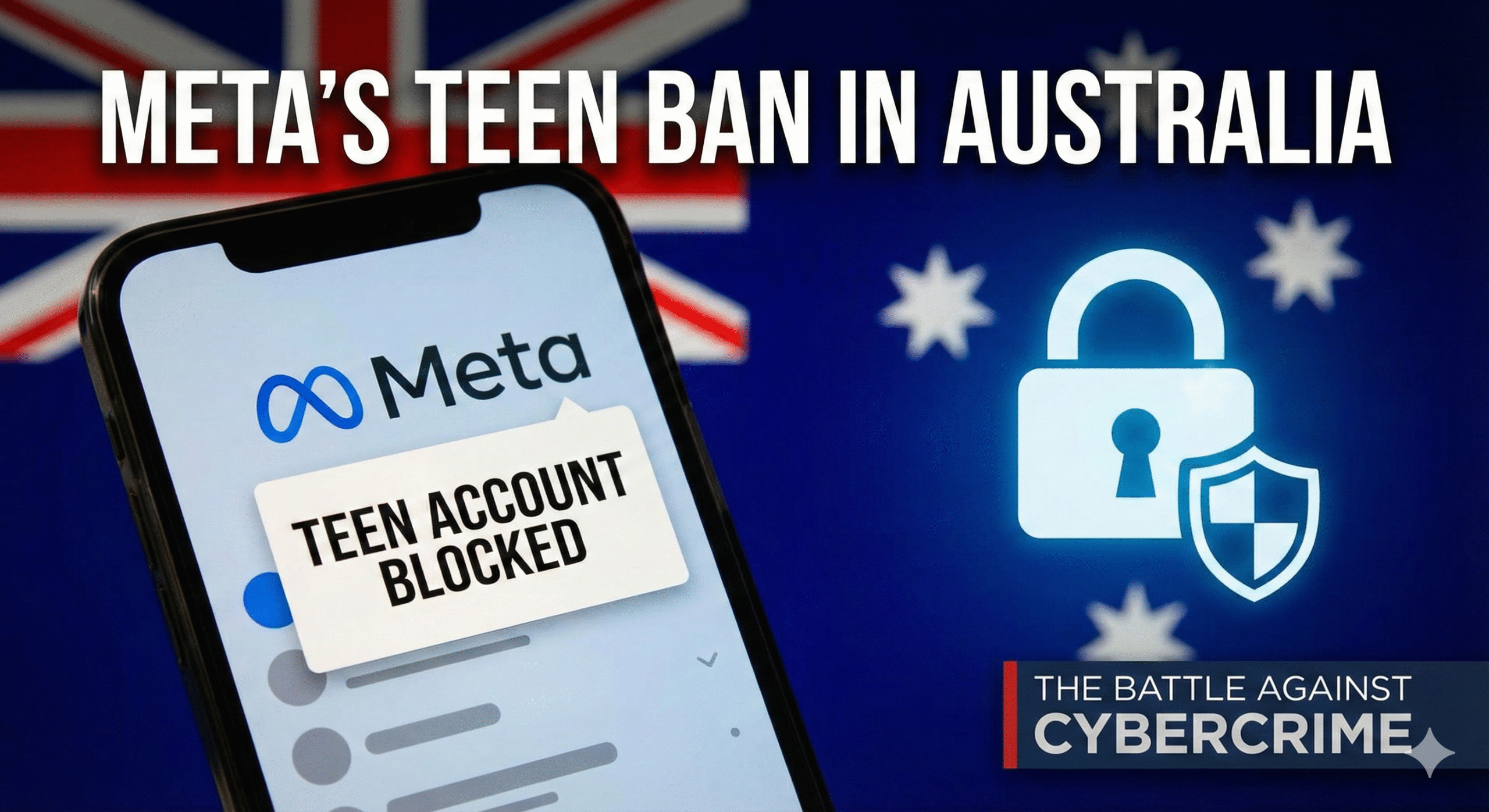
On December 4, 2025, a wave of digital disruption swept across Australia as Meta began blocking users under the age of 16 from its platforms, including Instagram, Facebook, and Threads. Overnight, countless young teens found their accounts deactivated or inaccessible, and new users under 16 were prevented from signing up. The sudden change sparked a mix of shock, frustration, and heated debate, raising questions about freedom, safety, and the growing role of cybercrime in shaping digital policies.
This bold move was not a random decision. Australia recently passed sweeping legislation mandating stricter age limits on social media usage for minors. Lawmakers cited concerns over online safety, cyber harassment, identity theft, and the exploitation of young users as driving factors. Meta’s enforcement of the law marked one of the first instances of a major platform implementing age-based restrictions at such a scale, and it instantly transformed the way teenagers interact with social media in the country.
The Rationale Behind the Ban
Social media is a double-edged sword for teenagers. On one side, it offers connection, creativity, and access to information; on the other, it exposes young users to a wide spectrum of risks. Cybercrime has become a pervasive part of this online ecosystem. Threats like phishing attacks, identity theft, fraudulent profiles, and digital harassment have become increasingly sophisticated, putting minors at heightened risk.
Australia’s lawmakers and digital safety advocates argued that incremental safety measures previously offered by social media platforms were insufficient. They contended that mandatory age restrictions and strict enforcement could help reduce the exposure of minors to online predators, scams, and other forms of cybercrime. By establishing a clear age barrier, the law aims to protect young users during a critical developmental period, shielding them from experiences that could compromise their mental health, financial security, or personal privacy.
Impact on Teens and Social Media Culture
For Australian teens, the ban represents a significant cultural and social shift. Social media is often a central hub for communication, self-expression, and creative engagement. Losing access to accounts can feel like being disconnected from peers, communities, and personal achievements. Many teens expressed frustration at suddenly being locked out of long-standing social circles, content libraries, and messaging networks.
The policy also introduces a new threshold of responsibility. Teens must now wait until they reach 16 before legally accessing these platforms, which raises questions about how young people learn to navigate digital spaces responsibly. While some argue that this will encourage safer online habits, others warn that teens may seek alternative, potentially riskier platforms to bypass the restrictions.
Cybercrime: The Hidden Force Behind the Ban
The role of cybercrime in driving this policy cannot be overstated. Online threats targeting minors are both frequent and evolving. Several patterns illustrate why governments and tech companies have prioritized youth protection:
1. Identity Theft and Account Hijacking
Teens often have less awareness of cybersecurity practices, making them prime targets for phishing schemes, account cloning, and identity theft. Criminals exploit social media accounts to gain access to personal information, digital wallets, and sensitive contacts.
2. Online Grooming and Exploitation
Predators use social media to target minors for harassment or exploitation. Restricting access limits the potential for these harmful interactions and reduces the avenues for malicious actors to reach vulnerable users.
3. Fraudulent Offers and Scams
Young users are frequently lured by fake contests, misleading advertisements, or fraudulent service offers. Scammers exploit their curiosity and lack of experience, using social media as a conduit for financial and personal gain.
4. Data Privacy Vulnerabilities
Social platforms collect extensive behavioral data, including preferences, location, and interaction patterns. For minors, these data points are particularly sensitive, and exposure can lead to misuse or exploitation.
5. Mental Health and Cyberbullying
While not strictly a cybercrime in legal terms, cyberbullying intersects with criminal harassment online. Teens often experience bullying, shaming, and psychological manipulation on social media, sometimes orchestrated by anonymous or fake profiles.
These cyber threats create a landscape where the youngest users are both highly engaged and highly vulnerable. By imposing age limits and restricting access, the government and platforms like Meta aim to mitigate these risks and reduce the likelihood of teens becoming victims of online crime.
Challenges and Criticism
Despite its protective intentions, the ban has faced criticism. Many argue that restricting social media access may not eliminate risk but merely push teens toward less regulated or underground platforms, where supervision is minimal, and risks may be higher. Additionally, critics question whether such policies overly restrict freedom of expression and access to educational or creative opportunities for young users.
Furthermore, the logistics of enforcement present challenges. Determining users’ ages relies on accurate self-reporting, and some tech-savvy teens may attempt to circumvent restrictions, introducing new layers of complexity for both regulators and platforms.
The Broader Implications for Digital Safety
Australia’s teen ban illustrates a broader tension between freedom and protection in the digital age. Governments must navigate the delicate balance between safeguarding minors from cybercrime and preserving their ability to explore, create, and communicate online. Social media platforms, in turn, face increasing pressure to implement security measures while maintaining user trust.
The policy also signals a growing recognition that cybercrime is not just a technical problem but a societal one. It underscores the need for holistic approaches: digital literacy education, secure platform design, parental guidance, and legal frameworks that adapt to new forms of online risk.
Conclusion: Protecting Youth in the Age of Cybercrime
Meta’s enforcement of Australia’s teen ban is more than a legal compliance exercise—it is a reflection of the complex interplay between technology, safety, and human behavior. Cybercrime has become an omnipresent threat, and young users are among the most vulnerable. Restricting access to social media for under-16s is a bold, controversial step aimed at protecting this demographic, highlighting the urgent need for stronger digital safeguards and awareness.
As social media continues to evolve, governments, platforms, parents, and educators must work together to create a safer online environment. Policies like Australia’s teen ban may be just the beginning of a new era where cybersecurity, mental health, and youth protection guide the rules of engagement in digital spaces.
In a world where a single click can open doors to both opportunity and danger, protecting the next generation from cybercrime is no longer optional—it is essential.