
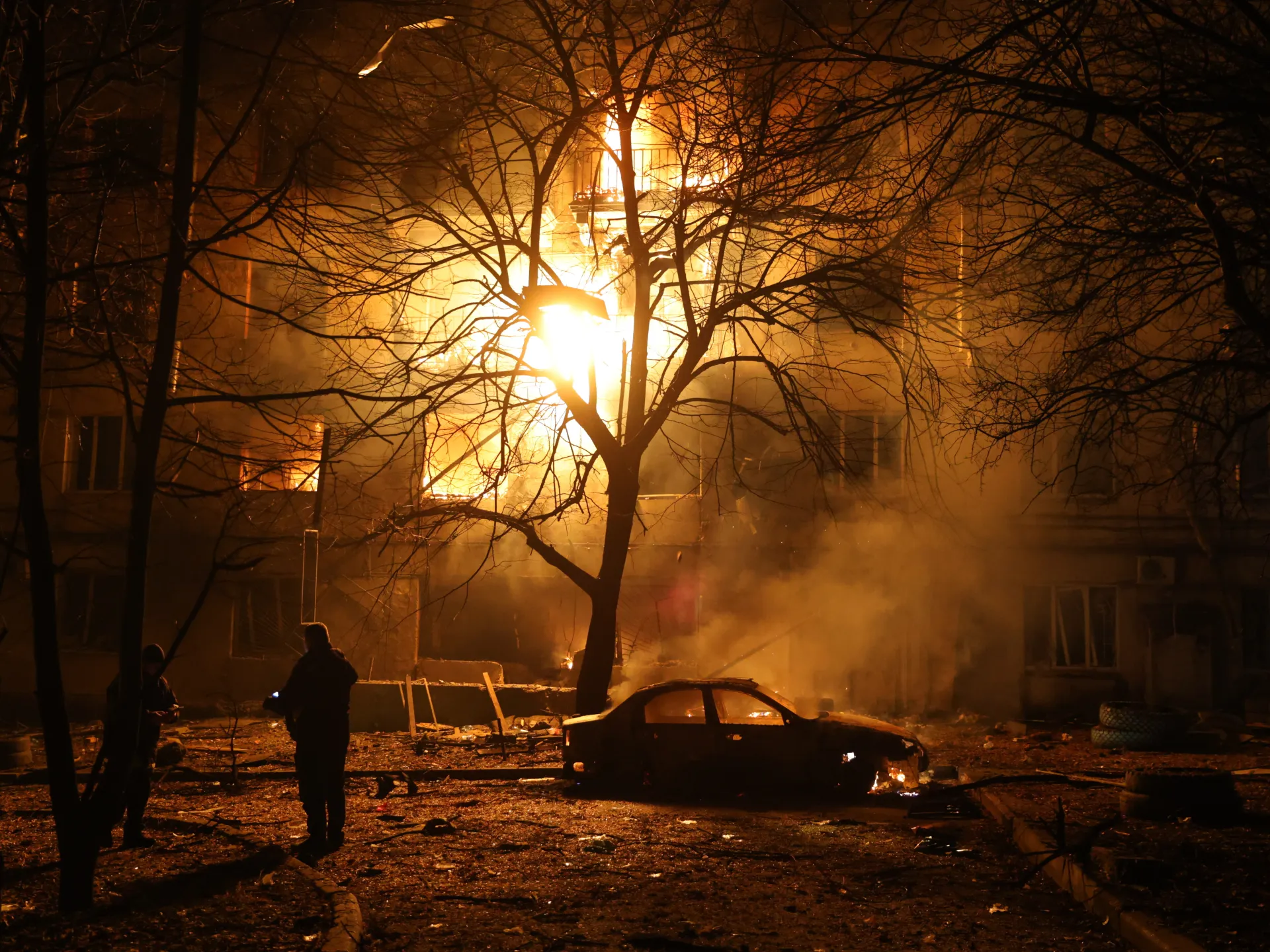
As peace negotiators gathered for US-led talks aimed at finding a path out of the long and devastating Ukraine–Russia war, the sound of explosions once again echoed across Ukrainian territory. In the Zaporizhzhia region, drone strikes injured several civilians, shattering homes and reminding the world that this war does not pause for diplomacy. This violent episode unfolded at the very moment when global actors believed progress toward peace was finally possible.
The contrast was striking and tragic: representatives discussing ceasefire conditions in conference halls, while families in southeastern Ukraine ran for cover amid fresh waves of drone attacks. The incident not only highlighted the fragility of the ongoing peace initiative but also revealed the deep disconnect between political conversations and the grim reality on the ground.
Diplomacy Meets Violence: The Dual Reality of the War
The timing of the strikes was far from accidental. In modern conflicts, military actions often become negotiation tactics. With peace efforts gaining momentum, Russia’s drone assault served as a stark reminder of the power dynamics at play. While diplomats talked, the battlefield continued to dictate the terms.
Ukraine’s leadership had signaled cautious support for the direction of the proposed peace plan. International mediators expressed optimism, describing the negotiations as constructive and forward-moving. Yet the drone attacks suggested that a political handshake alone cannot restrain ongoing military ambition.
This duality poses a complex question: how meaningful can peace negotiations be when violence continues simultaneously? Every drone strike chips away at the fragile trust required for any long-term settlement. For Ukraine’s people, it becomes increasingly difficult to believe in diplomatic promises when destruction still rains from the sky.
The Human Toll: Beyond Injuries and Statistics
Reports of civilians wounded tell only part of the story. Behind every number lies a human tragedy — a mother injured while preparing breakfast, a child trembling in fear as windows shatter, elderly residents unable to run fast enough to safety. Entire neighborhoods in Zaporizhzhia have been living in a constant cycle of tension, rebuilding, and renewed destruction.
The psychological impact is enormous. Civilians live with the constant hum of anxiety, never knowing when the next siren will wail or the next drone will appear. Children are growing up in a world where hiding in basements is normal, where the sound of engines overhead triggers panic rather than curiosity.
Homes are damaged, electricity grids disrupted, hospitals overwhelmed. Even when peace talks occur abroad, the everyday life of Ukrainians remains dominated by uncertainty. Peace remains a distant vision rather than a lived experience.
What the Drone Strikes Reveal About the State of the War
The recent attacks highlight several truths about today’s stage of the conflict:
1. The Battlefield Still Shapes the Negotiation Table
Military actions send strong signals during peace talks. By conducting strikes, Russia may seek to negotiate from a perceived position of strength, implying that it can escalate or de-escalate at will.
2. Trust is Scarce and Fragile
For negotiations to succeed, both sides must show good faith. Violent actions during talks undermine trust not only between governments but also among citizens hoping for an end to war.
3. Civilians Are the Unseen Casualties of Diplomacy
While international actors discuss frameworks and principles, ordinary people are trapped in the direct line of fire. Their safety cannot be postponed in order to secure political outcomes.
4. Peace Cannot Exist Only on Paper
Even the most elaborate diplomatic agreement will collapse if violence continues. A durable peace requires more than signatures — it requires adherence, enforcement, monitoring, and genuine willingness to stop fighting.
What Needs to Change for Peace to Become Reality
Despite rising tensions, there remains an opportunity for meaningful progress — but only if both the diplomatic and military dimensions are addressed simultaneously.
1. Real and Monitored Ceasefire Measures
Ceasefires must be enforced by neutral monitors, with consequences for violations. Without this, agreements risk becoming symbolic gestures rather than functional commitments.
2. Prioritizing Civilian Protection
Humanitarian corridors, reinforced shelters, reliable energy systems, and medical support must be central to any peace framework. Civilians cannot continue to bear the brunt of geopolitical negotiations.
3. Clear, Actionable Steps Toward De-Escalation
Talks must define timelines, responsibilities, and enforcement mechanisms. Ambiguity creates space for manipulation and further violence.
4. Supporting Long-Term Recovery
Even with a peace agreement, Ukraine will face years of rebuilding. International partners must prepare to offer sustained support — not just emergency aid but long-term reconstruction and social healing.
5. Accountability for Violations
Lasting peace demands accountability. Any agreement must include pathways to address war crimes, attacks on civilians, and breaches of humanitarian law. Without justice, the wounds of war remain open.
A Turning Point or a Warning Sign?
The drone strikes during peace talks may ultimately serve as a test of the international community’s resolve. Will mediators push harder for enforceable agreements, or will they continue to rely on dialogue alone? Will Ukraine be pressured to compromise while under fire, or supported to negotiate from a position of security and dignity?
History teaches us that wars rarely end neatly. Yet, at moments like this, the choices made by leaders and mediators can determine whether peace becomes possible or whether conflict becomes entrenched for years to come.
For the people of Ukraine, peace is not a diplomatic concept or a political achievement — it is the difference between life and death, fear and stability, destruction and hope. As long as drone strikes continue, the promise of peace will remain overshadowed by the reality of war.
The world watches as both the battlefield and the negotiating table shape the next chapter of this conflict. Whether this moment becomes a turning point toward true peace — or another tragic reminder of its fragility — depends on the actions taken in the days and weeks ahead.

