
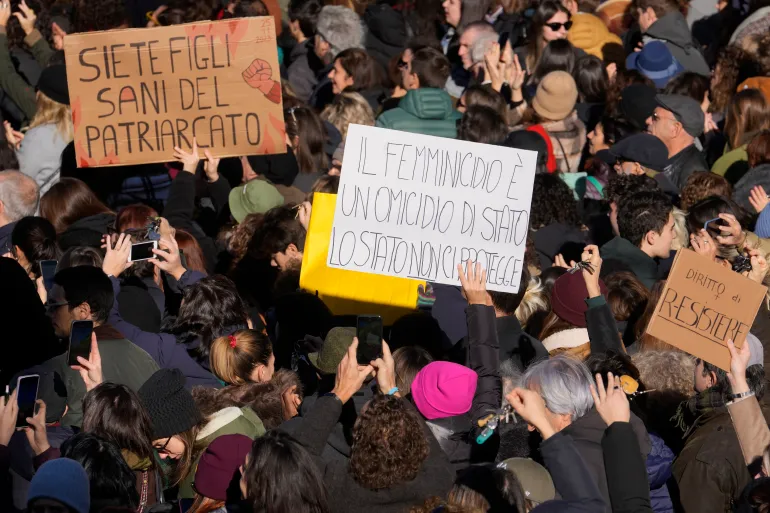
When a nation rewrites its criminal code to name a crime that has long existed but rarely been acknowledged, it sends a message far louder than punishment alone. Italy’s recent decision to classify femicide as a distinct criminal offence marks one of the most significant legal and social awakenings of the decade.
For years, gender-based killings were buried under general homicide laws, obscuring the reality that many women were murdered because they were women. Italy’s new legislation finally brings that truth into the light — and demands that it be confronted head-on.
Why Italy Took This Historic Step
Italy has faced mounting pressure in recent years as cases of violence against women gained national and international attention. Many of these tragedies shared the same heartbreaking pattern: women killed by current or former partners, often after months or years of unreported abuse.
Public outrage peaked after the widely publicized killing of a young university student whose death shook the nation. Her story ignited demands for legal reforms that would not only punish offenders but also recognize the gender-motivated nature of these crimes.
This wave of activism, along with rising nationwide statistics of violence against women, pushed lawmakers to ask a painful but necessary question: How can a society stop what it refuses to name?
The answer became clear — by naming it, defining it, and criminalizing it directly.
What the New Law Does
Italy’s new femicide law reshapes the legal landscape in several crucial ways:
1. Femicide Becomes a Separate Crime
For the first time, killing a woman because of her gender is legally distinct from ordinary homicide. This acknowledges that such crimes are rooted in misogyny, power, and control — not random violence.
2. Life Imprisonment for Perpetrators
The law imposes life imprisonment, establishing one of the harshest penalties in Europe for gender-motivated killings.
3. Expanded Definition of Gender-Based Violence
The legislation widens the scope of gender-related crimes, encompassing:
-
Serious assault
-
Stalking
-
Sexual violence
-
Revenge porn
-
Acts that target a woman’s dignity, autonomy, or safety
4. Stronger Protections for Women
The law obligates the state to strengthen:
-
Anti-violence centers
-
Emergency shelters
-
Crisis hotlines
-
Rapid-response mechanisms for women in danger
These measures aim not only to deliver justice after a crime but also to prevent violence before it happens.
5. Stricter Sentencing Conditions
Options such as parole or sentencing reductions are significantly restricted, ensuring accountability and reinforcing the seriousness of gender-based crimes.
The Social and Cultural Impact
Italy’s legal shift is not merely a change in penal code — it’s a cultural statement. This law has the power to transform societal attitudes by:
Acknowledging the Reality of Gender-Based Killings
For the first time, the justice system recognizes that femicide is driven by discrimination, misogyny, and control. Naming the crime forces society to confront its root causes.
Deterring Future Violence
By imposing life imprisonment and strengthening protective systems, the law aims to reduce repeat offenses and discourage potential abusers.
Empowering Women
Stronger legal protections give women more confidence to report abuse, seek help, and escape dangerous situations without fear of being dismissed.
Shaping Public Awareness
Laws influence culture. This decision reinforces that violence against women is not a private matter or a domestic issue — it is a national crisis demanding collective response.
Why Law Alone Isn’t Enough
While Italy’s femicide law is a historic milestone, true progress requires more than strong penalties.
Cultural Mindsets Must Change
Patriarchal norms, unequal power structures, and societal silence around abuse cannot be dismantled by law alone. Education, awareness, and community responsibility are critical.
Victims Need Accessible Support
Many women still fear reporting violence due to stigma, financial dependence, or lack of trust in authorities. Support systems must be accessible, empathetic, and reliable.
Prevention Must Start Early
Schools, families, and media must promote respect, equality, and emotional awareness. Teaching young people about consent, boundaries, and healthy relationships is essential.
Violence May Evolve
If lethal violence becomes harder, abusers may use psychological control, digital abuse, financial manipulation, or intimidation. Society must stay vigilant and update protections continuously.
A Model for the World
Italy’s move sets a powerful example for other nations grappling with gender-based violence. It demonstrates that acknowledging femicide as a distinct crime can:
-
Strengthen justice
-
Improve protection for women
-
Promote cultural change
-
Align national laws with modern human-rights standards
The law reminds the world that violence against women is not an isolated problem — it is systemic, widespread, and deserving of direct legal recognition.
Conclusion: A New Chapter Begins
Italy’s new femicide law is more than legislation — it is a promise. A promise that women’s lives matter, their dignity matters, and their safety is not negotiable.
This bold step forward lays the foundation for a safer, more equal society. The journey, however, is far from over. Laws can punish, but only society can transform. And transformation begins with awareness, empathy, and collective responsibility.
Italy has opened the door. The world now watches — and many hope it will walk through next.