
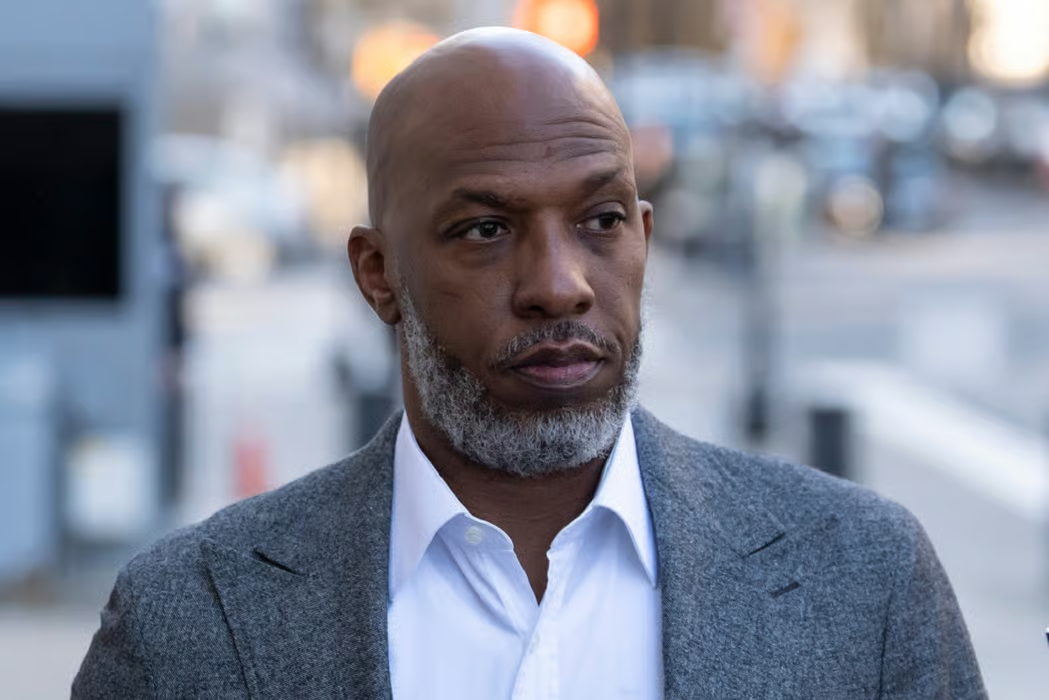
Chauncey Billups, the former NBA star and Hall of Famer, is once again in the headlines—this time, for legal reasons. On November 24, 2025, Billups appeared in federal court in Brooklyn, New York, and pleaded not guilty to charges related to illegal poker operations allegedly connected to organized crime. The case is part of a wider federal investigation targeting over 30 individuals involved in high-stakes poker games, many of which are said to be tied to New York Mafia families.
This article explores the charges against Billups, the context of the case, the alleged criminal methods, and the implications for both the former athlete and the wider legal landscape.
The Charges Against Billups
Billups is facing serious allegations, including conspiracy to commit wire fraud and money laundering. Federal prosecutors claim that these charges stem from organized, illegal poker operations in which at least 25 games were manipulated to benefit specific participants, generating more than $7 million in profits.
These charges carry potential penalties of up to 20 years in prison for each count, depending on the outcome of the trial. While Billups pleaded not guilty, prosecutors have suggested that the scheme involved sophisticated methods to ensure financial gain and control over the games.
The Scope of the Case
The federal indictments cover two main operations: one focused on illegal poker games, and the other on a sports-betting ring. Billups is implicated specifically in the poker-related activities. Prosecutors allege that the operations involved influential individuals, including professional athletes, who were invited to participate in high-stakes games that were rigged to favor certain players or insiders.
The case is being handled by the U.S. District Court for the Eastern District of New York, and prosecutors have noted that discovery materials related to the case exceed one terabyte in data size, highlighting the extensive nature of the investigation.
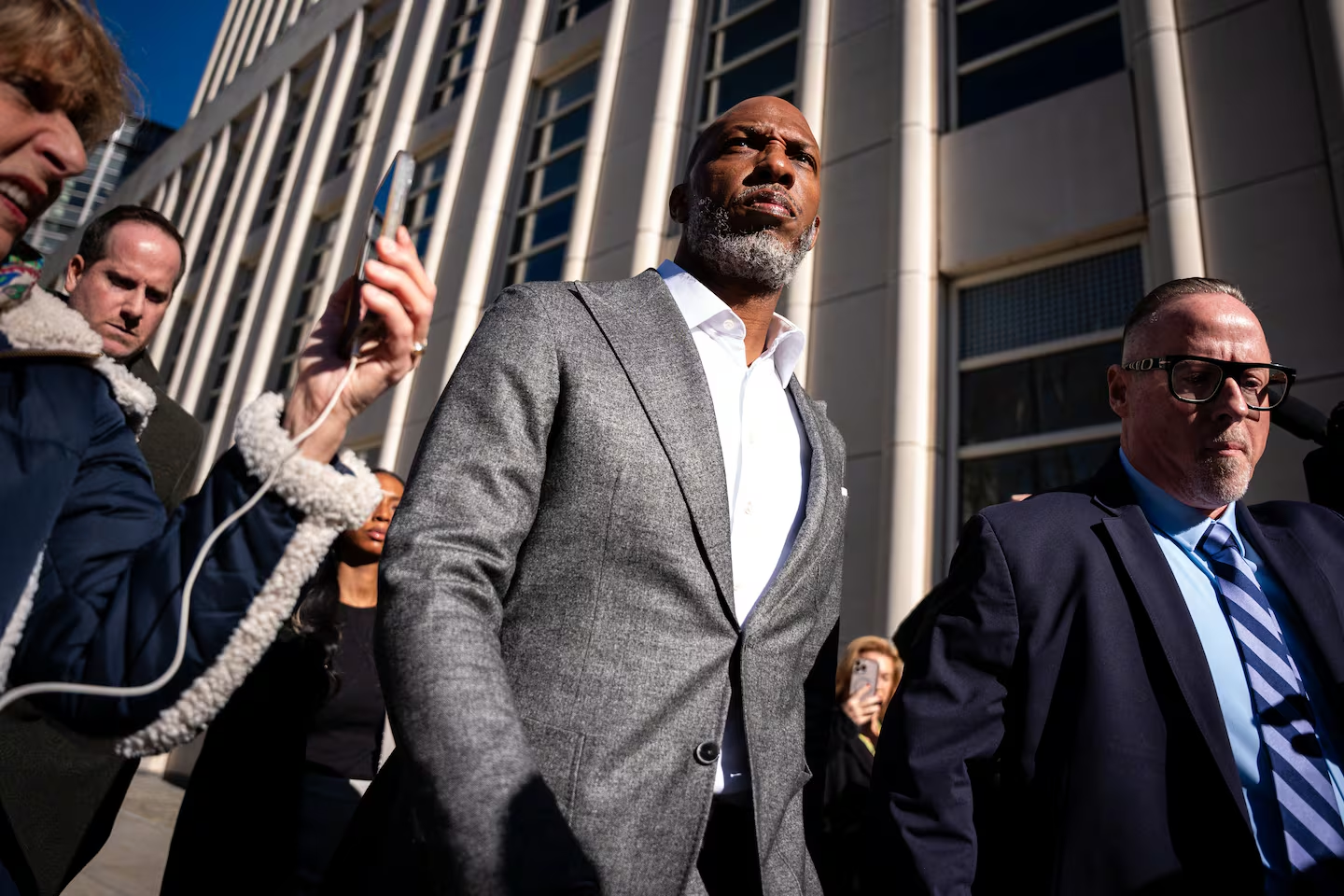
How the Scheme Allegedly Worked
Court documents suggest that the illegal poker games employed advanced methods to ensure predetermined outcomes:
-
Rigged shuffling machines were allegedly used in some games, equipped with cameras or sensors to monitor the order of cards.
-
X-ray or specialized tables reportedly allowed organizers or co-conspirators to track card positions and relay information to players or staff.
-
Special eyewear or contact lenses may have been used to read marked cards, giving certain participants an unfair advantage.
-
Hidden cameras were reportedly installed in tables or nearby locations to monitor gameplay.
Together, these methods suggest a highly organized network of fraud designed to manipulate outcomes in favor of a select few, while other participants were unaware of the scheme.
Billups’ Alleged Role
According to prosecutors, Billups acted as a “face card” for the operations—a prominent figure whose presence attracted other wealthy players to the games. The allegations suggest that his fame may have encouraged participation, though prosecutors do not yet claim that Billups was the central organizer.
Reports also indicate that Billups may have received financial benefits from at least one game, including a wire transfer of $50,000, which prosecutors claim was part of the scheme’s profits. While Billups maintains his innocence, his high-profile involvement has drawn significant public attention and media coverage.
Links to Organized Crime
Several defendants in the case are allegedly connected to New York Mafia families, including the Genovese and Bonanno crime families. These individuals are accused of coordinating the poker operations, overseeing profits, and ensuring compliance through intimidation or financial control.
Prosecutors assert that some participants faced coercion or threats to maintain the secrecy and profitability of the games, highlighting the serious criminal context in which these poker operations occurred.
Legal Proceedings and Bail Conditions
Billups was released on a $5 million bond, secured by his property in Colorado. The conditions of his release include:
-
Surrendering his passport
-
Abiding by strict travel restrictions
-
Reporting any financial transactions exceeding $25,000
-
Avoiding contact with co-defendants or potential witnesses
The next court status conference is scheduled for March 4, 2026, and prosecutors have indicated that some defendants are engaged in plea negotiations. The trial, if it proceeds, could potentially start later in 2026, depending on how pre-trial motions and court procedures unfold.
Implications for Billups and the Public
If convicted, Billups could face severe penalties, including long-term imprisonment, which would impact both his personal life and professional career. At the time of his arrest, he was serving as the head coach of the Portland Trail Blazers, a role that may be affected depending on the outcome of the trial.
Beyond the individual case, this investigation sheds light on how organized crime can infiltrate professional settings, including high-stakes recreational environments like poker games. It also demonstrates the use of modern technology and complex coordination in executing financial crimes.
Billups’ Defense
Billups’ legal team maintains that he is innocent and that his role was exaggerated by prosecutors. His attorneys emphasize that his reputation and career as a professional athlete and coach would not have been jeopardized without cause. They argue that while he may have attended some poker games, there is no evidence that he orchestrated or knowingly participated in fraudulent activity.
Conclusion
The Chauncey Billups case represents a complex intersection of professional sports, organized crime, and high-stakes gambling. As the legal proceedings unfold, the outcome will have significant implications not only for Billups himself but also for broader concerns regarding illegal gambling operations and organized crime in the United States.
For fans, legal observers, and the public, the case serves as a reminder of the serious consequences associated with involvement in criminal activities, regardless of one’s fame or status.
Billups maintains his not-guilty plea, and the upcoming months will determine how the case progresses through the federal court system.