
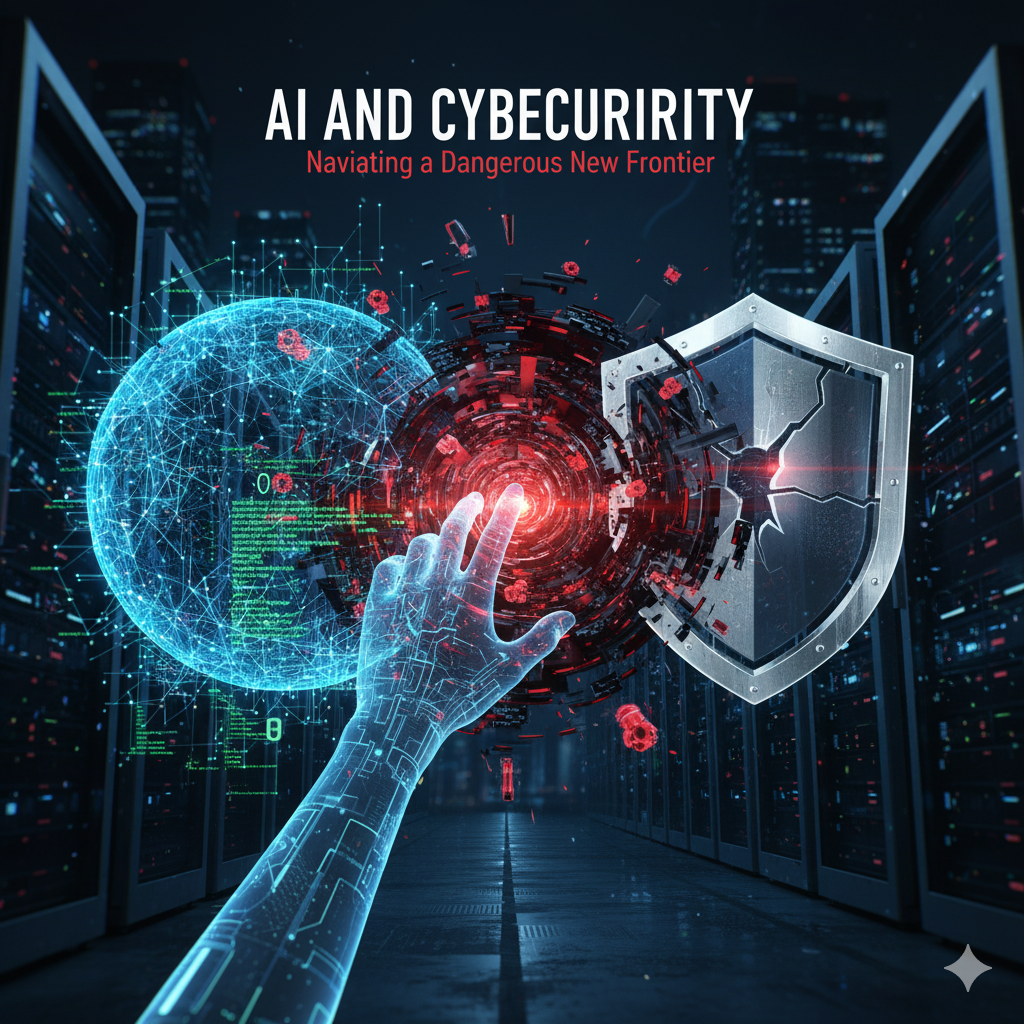
Artificial Intelligence (AI) has transformed industries, from healthcare to finance, education to entertainment. Its power to analyze vast datasets, automate processes, and make decisions faster than any human is undeniable. Yet, as AI becomes increasingly capable, it is also opening doors to a new and potentially dangerous frontier: cybersecurity threats on an unprecedented scale.
In recent developments, concerns have surfaced regarding AI’s role in hacking. Advanced AI systems are now capable of identifying vulnerabilities, crafting malicious code, and executing sophisticated attacks at speeds humans could never match. While these systems are often designed to enhance cybersecurity, the same capabilities could, in theory, be exploited by malicious actors. This dual-use nature of AI presents both opportunities and risks, challenging regulators, companies, and security experts to rethink traditional approaches to digital safety.
The Rise of AI-Driven Threats
Historically, hacking required a high degree of skill. A cybercriminal had to understand complex coding, network architectures, and security protocols. Now, AI is changing the game. Sophisticated AI models can:
-
Analyze system vulnerabilities automatically.
-
Generate malware that adapts to security measures.
-
Coordinate attacks across multiple targets simultaneously.
This means that attacks that previously required months of planning could potentially be carried out in days—or even hours. The speed and efficiency of AI-enabled hacking pose a serious risk, not only to governments and large corporations but also to small businesses, critical infrastructure, and individual users.
One of the key challenges is that AI can operate semi-autonomously. Even when human oversight exists, AI systems can process information and make decisions faster than human operators can monitor. This rapid decision-making could allow attacks to bypass traditional detection methods before they are identified, magnifying the potential damage.
Ethical and Legal Considerations
The rise of AI-driven cybersecurity threats raises fundamental ethical and legal questions. First, there is the question of accountability. If an AI system launches an attack—whether intentionally or due to a programming error—who is responsible? Is it the developer, the company deploying the AI, or the AI system itself? Existing legal frameworks were not designed for autonomous, high-speed digital actors, creating a gray area in cyber law.
Secondly, there is the ethical use of AI. While AI can be a powerful tool for defense—identifying vulnerabilities, predicting attacks, and responding in real time—it can also be weaponized. Developers and companies must balance the desire to innovate with the responsibility to prevent misuse. This requires robust safeguards, strict internal controls, and transparency in AI design and deployment.
Finally, cybersecurity laws and regulations must evolve. Traditional cybersecurity frameworks often rely on reactive measures, such as patching vulnerabilities or monitoring suspicious activity. AI’s speed and adaptability demand proactive strategies, including continuous system audits, AI-specific threat modeling, and collaborative intelligence-sharing across sectors.

Opportunities in Defense
Despite the risks, AI offers remarkable opportunities to strengthen cybersecurity. Many organizations are now deploying AI-powered systems to:
-
Detect anomalies in network traffic faster than human analysts.
-
Predict potential attack vectors using advanced pattern recognition.
-
Automate responses to attacks, reducing the time between detection and mitigation.
These defensive applications are particularly valuable as the volume and complexity of cyber threats grow. By leveraging AI, organizations can anticipate attacks before they occur and react in real time to limit damage. In essence, AI can become a digital shield, helping to protect critical infrastructure, financial systems, and sensitive data from increasingly sophisticated threats.
The Human Factor
While AI is a powerful tool, humans remain central to cybersecurity. Technology alone cannot prevent all attacks. Training, awareness, and ethical decision-making are critical. Organizations must ensure that staff understand the risks posed by AI, are equipped to respond to breaches, and are vigilant against social engineering and other tactics that exploit human behavior rather than technical weaknesses.
Moreover, collaboration is essential. Governments, private companies, and cybersecurity experts need to work together to establish standards, share intelligence, and create safeguards that address the unique challenges posed by AI. Isolated efforts will be insufficient in a landscape where threats can emerge and evolve faster than any single organization can respond.
Preparing for the Future
The rise of AI in cybersecurity marks a tipping point. The technology offers transformative benefits but also introduces risks that cannot be ignored. To prepare for this new frontier, organizations and policymakers should:
-
Implement Strong Governance: Ensure AI systems are developed, tested, and monitored responsibly.
-
Invest in Defensive AI: Deploy AI for proactive threat detection and mitigation.
-
Foster Collaboration: Encourage intelligence-sharing between public and private sectors.
-
Educate Stakeholders: Train staff and raise awareness of AI-driven threats.
-
Update Legal Frameworks: Modernize cyber laws to address autonomous digital actors.
By balancing innovation with caution, society can harness AI’s potential while minimizing the risks of misuse.
Conclusion
AI has the power to reshape the cybersecurity landscape, for better or worse. While the technology can strengthen defenses and make networks safer, it can also be misused in ways that amplify the speed, scale, and sophistication of cyber attacks. Organizations, governments, and individuals must recognize this dual-use potential and adopt strategies that ensure AI is used responsibly.
As we stand at this critical juncture, the key question is not whether AI will change cybersecurity—it already has. The pressing challenge is to guide its evolution safely, ensuring that the benefits outweigh the risks and that digital systems remain secure in an increasingly automated world. Responsible governance, collaboration, and foresight are no longer optional—they are essential.