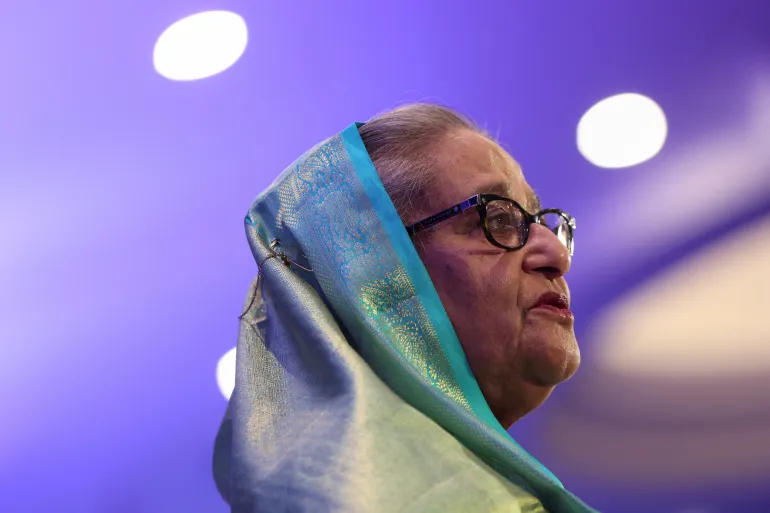
The political landscape of Bangladesh has entered one of its most turbulent phases following the death sentence handed down to former Prime Minister Sheikh Hasina. The ruling, delivered by a special tribunal on charges of crimes against humanity, has raised intense debate both inside the country and across the international political arena. Supporters call it long-awaited justice for victims of state violence, while critics view it as a grave distortion of law and an attempt to reshape Bangladesh’s political future.
Understanding this moment requires a balanced exploration of the charges, the judicial process, public reaction, and the wider implications for the country’s democratic framework.
The Charges: What Led to the Verdict?
Sheikh Hasina was accused of authorizing excessive force during student-led protests in 2024. According to the tribunal’s findings, state forces used lethal measures — including aerial surveillance and weaponized tactics — against demonstrators. These incidents resulted in multiple casualties, large-scale injuries, and widespread allegations of systemic abuse.
The tribunal concluded that Hasina held command responsibility, meaning that even if she did not physically carry out the acts, she was in a position of power to prevent or stop them but failed to do so. This principle has been used in international legal forums dealing with war crimes and mass atrocities. Its application here has ignited debate: was this a correct use of international law, or was it selectively employed?
The Legal Debate: Fair Trial or Flawed Process?
The central legal question revolves around whether the trial was fair, impartial, and consistent with international standards.
Supporters of the verdict argue that:
- No leader should be above accountability.
- The scale of violence justified a thorough investigation.
- Bangladesh showed a commitment to applying global legal principles domestically.
However, critics raise significant concerns:
- The trial took place during a politically volatile period.
- The defense allegedly lacked full access to evidence and adequate time to prepare.
- Some of the key hearings were conducted while Hasina was in custody or in absentia.
- The speed of the proceedings raised questions about political pressure.
The most debated element is the death penalty itself. Many legal scholars worldwide oppose capital punishment in crimes involving political violence, arguing that irreversible punishment requires an extraordinary level of judicial transparency — something critics allege was missing.
Political Landscape: A Nation More Divided than Ever
Sheikh Hasina is not merely a former prime minister; she is a defining political figure in Bangladesh’s modern history. Her party, the Awami League, has dominated the political scene for decades and holds deep-rooted support across the country.
Her sentencing immediately triggered political shockwaves:
- Her supporters view the verdict as a politically motivated attempt to dismantle the Awami League.
- Opponents celebrate it as justice for citizens harmed under her governance.
- Neutral observers fear this ruling might trigger a chain of political instability, renewed protests, and social fragmentation.
Bangladesh has historically oscillated between democracy, military influence, and political dynasties. This ruling threatens to reopen old wounds and potentially deepen mistrust between political factions.
Public Sentiment: Between Anger, Relief, and Uncertainty
The public reaction is not one-dimensional. It varies across age groups, political backgrounds, and regions:
- The Youth
The young protesters who once filled the streets see the verdict as validation of their struggle. Many believe that state violence during the protests was excessive and that accountability is necessary, regardless of who holds office.
- Rural Supporters
In many rural areas, Hasina remains a symbol of development and stability. Her supporters perceive the trial as an attack on their political identity and fear that the country is stepping into an uncertain future without strong leadership.
- Civil Society
Human rights activists are conflicted. While they welcome accountability, they oppose the death penalty and express concerns about whether the legal process was sufficiently transparent.
The mixed emotions reflect a nation standing at a crossroads.
Human Rights Concerns: Justice vs. Punitive Politics
Human rights frameworks emphasize due process, fair trial guarantees, and proportional punishment. The severity of the sentence has raised critical questions:
- Should a leader be sentenced to death for failing to prevent state violence?
- Were alternative forms of justice, such as life imprisonment or restorative processes, adequately considered?
- Was the investigation free from political interference?
Many analysts argue that justice must not only be done but must be seen to be done. The legitimacy of the verdict depends heavily on public perception and the credibility of the judicial process.
Potential Impact on Bangladesh’s Future
- Political Stability
The verdict may lead to heightened political tensions. Large-scale demonstrations, counter-protests, and clashes cannot be ruled out. Bangladesh’s history shows that emotionally charged verdicts often reshape political timelines, elections, and alliances.
- Judicial Precedent
This case sets a powerful precedent for how future leaders may be held accountable. If the process is seen as credible, it may strengthen the rule of law. If seen as biased, it could erode trust in the judiciary.
- Election Dynamics
The ruling may influence upcoming elections dramatically. Without Hasina, the Awami League faces an identity crisis. Conversely, rival parties may see this as an opportunity to consolidate their power.
- International Relations
Global partners will closely monitor Bangladesh’s handling of this sensitive issue. The balance between justice and fairness will influence diplomatic relationships and foreign investment.
Conclusion: A Defining Moment, but Uncertain Path Ahead
Sheikh Hasina’s death sentence marks one of the most consequential decisions in the country’s history. Whether seen as a victory for justice or a dangerous political maneuver, it has undeniably reshaped national discourse.
Bangladesh now faces a vital test:
- Can it manage accountability without descending into political revenge?
- Can the legal system strengthen its credibility rather than weaken it?
- Can political parties avoid deepening the divide and instead work toward reconciliation?
The answers to these questions will determine not only the fate of Sheikh Hasina but the future of Bangladesh’s democracy itself.