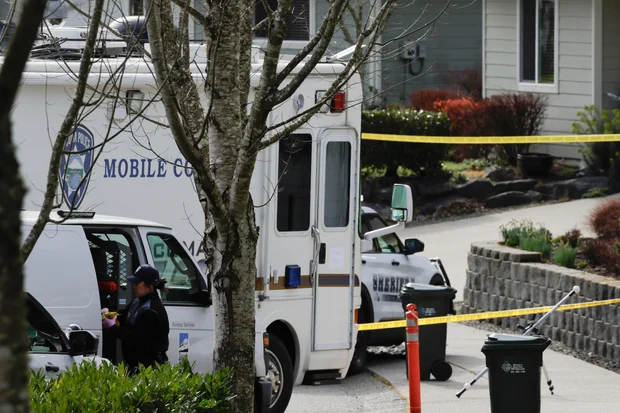

In a joint operation that demonstrated the precision and cooperation of modern law enforcement, Putnam Police officers and the U.S. Marshals Service apprehended a 19-year-old man from Thompson, Connecticut, who was wanted in Massachusetts on serious criminal charges. The arrest, which took place earlier this week, ended weeks of investigation and coordination between state and federal agencies.
A Quiet Morning Turns into a Swift Arrest
Residents of the quiet town of Putnam, nestled in northeastern Connecticut, were surprised when law enforcement vehicles converged on a residential area early in the morning. Officers from the Putnam Police Department, acting on intelligence shared by Massachusetts authorities, confirmed the presence of the suspect—identified as Landon Corriveau—who was wanted for two counts of indecent assault and harged with inappropriate touching of a person above the age of 14.”
Sources close to the investigation revealed that authorities had been tracking Corriveau’s movements for several days. The U.S. Marshals Fugitive Task Force, known for its expertise in locating and apprehending suspects across state lines, played a key role in confirming his location and coordinating the timing of the arrest.
According to officials, Corriveau did not resist when officers arrived at his residence. He was taken into custody without incident, a sign that investigators’ careful planning paid off.
From Massachusetts to Connecticut: Crossing Borders to Evade Justice
Corriveau’s arrest highlights a recurring challenge for law enforcement agencies—suspects fleeing across state borders in hopes of escaping prosecution. In this case, authorities in Massachusetts had already issued a warrant for Corriveau’s arrest in connection with an alleged assault earlier this year.
When he failed to appear for questioning, investigators began tracing his movements. Digital footprints, social connections, and local tips eventually led them to Connecticut. What followed was a coordinated effort between Massachusetts State Police, Putnam Police, and the U.S. Marshals Service, culminating in his arrest on Connecticut soil.
Under U.S. law, when a person wanted in one state is found in another, the arresting jurisdiction charges them as a fugitive from justice. This allows authorities to hold the suspect temporarily while legal steps for extradition—the process of returning the suspect to the original state—are initiated.
Inside the Legal Process
After being taken into custody, Corriveau was transported to the Putnam Police Department, where he was formally charged as a fugitive from justice. Later that day, he was brought before a local judge for arraignment. His bond was set at $100,000, reflecting both the seriousness of the underlying charges and the fact that he had fled another state.
If Massachusetts authorities complete the extradition request, Corriveau will be transferred back to their jurisdiction to face the original charges. Until then, he remains under the supervision of Connecticut authorities.
Legal experts note that while extradition between U.S. states is typically straightforward, the process can still take several days or even weeks, depending on the court schedules and paperwork involved. Once returned, Corriveau will likely face a preliminary hearing, where prosecutors will present the evidence that led to the charges.
The Role of Interagency Cooperation
This case stands as another example of how collaboration between local and federal law enforcement can bring fugitives to justice swiftly and safely. The U.S. Marshals Fugitive Task Force, which operates across multiple states, often assists smaller departments like Putnam’s in complex cases involving interstate movement.
Putnam Police Chief Christopher Ferace praised the coordination between his department and federal authorities, noting that teamwork and information-sharing were key to the successful operation. He emphasized that even small towns are part of a much larger network that works tirelessly to track down offenders who believe they can escape justice by simply crossing a border.
Community Reaction and Broader Implications
The arrest has drawn attention within the local community, which is known for its quiet neighborhoods and small-town character. Residents expressed a mix of relief and unease—relief that a wanted suspect had been captured without incident, and unease that someone facing such serious charges had been living in their midst.
Parents and educators have also raised questions about awareness and safety, particularly around protecting young people and reporting suspicious activity. The incident has reignited discussions about public access to warrant databases and how communities can work alongside law enforcement to ensure safety without resorting to fear.
A Lesson in Accountability
While details of the Massachusetts case remain under wraps, the arrest of a young man accused of indecent assault underscores a broader truth: accountability in the digital and mobile age is harder to evade. Law enforcement agencies have access to improved tracking technologies, interlinked databases, and rapid information exchange across jurisdictions—all tools that make fleeing far more difficult than in the past.
Criminal defense experts note that many fugitives underestimate the cooperation between states, assuming they can “start fresh” elsewhere. However, as this case demonstrates, those efforts rarely succeed. Sooner or later, information surfaces, and coordinated law enforcement closes in.
What Comes Next
Corriveau’s legal journey is just beginning. Once extradited to Massachusetts, he will face prosecution for the alleged offenses, which carry potentially severe penalties if convicted. The process will likely include:
-
A preliminary court appearance.
-
Possible plea negotiations or indictment.
-
Trial proceedings where evidence and witness testimony will determine his guilt or innocence.
In the meantime, authorities in both Connecticut and Massachusetts continue to review whether any additional offenses were committed during his time on the run.
Conclusion
The arrest of Landon Corriveau in Putnam is more than just a local police story—it’s a case study in how law enforcement coordination works in practice. Through clear communication, tactical precision, and shared determination, officers from multiple jurisdictions ensured that a fugitive accused of a serious crime will now face justice.
The message is clear: crossing state lines doesn’t erase responsibility. Whether in a large city or a small New England town, the reach of the law remains firm. For the community of Putnam, this case is a reminder that vigilance, cooperation, and trust in law enforcement remain vital in keeping neighborhoods safe.