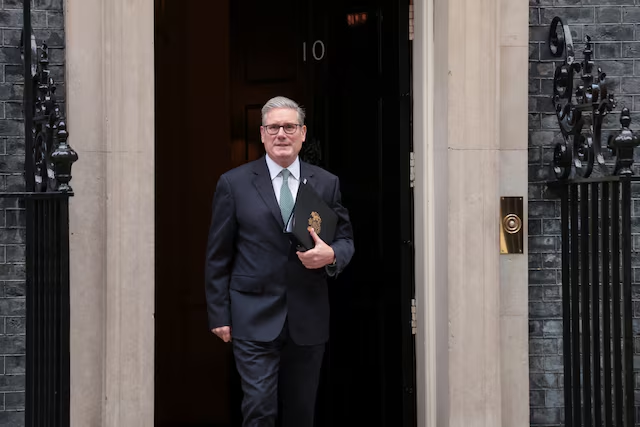
Two men, 21 and 35, have appeared at the Central Criminal Court, the Old Bailey, London and are charged with conspiracy to commit arson to property associated with Prime Minister Keir Starmer. Both of the accused were found innocent of all charges that they had conspired to carry out coordinated attacks on at least two target sites which were suspected to be linked to the Prime Minister a vehicle that he used previously and a privately-owned house.
Besides the fact that the case has caught the eye of the media not only due to its closeness to one of the top-most political offices of the country, but also due to the fact that it leads to the introduction of the existing tension in British society related to political legitimacy, extremism, and the demarcation of the limits between protest and criminality.
The Allegations
Court records reveal that the men have engaged in surveillance missions to target sites and reportedly talking on how they are going to ignite including acquisition of accelerants and explosives. According to investigators, encrypted messaging appraisals reclaim digital communications, which constitute a large portion of the evidence.
The government has thus far refused to come out publicly and declare the alleged motive of the planned attacks. Nevertheless, prosecutors implied in the course of the procedural hearing that the suspects might have undergone political hatred and anti-government feelings. The two men were previously arrested in the first half of the year after a collaborative effort between the counter-extremism units and the Metropolitan Police.
The Discovery of the alleged plot
The online surveillance tools have indicated according to investigative sources that there was a source of suspicious online activity regarding the tour of discussions of symbolic fires that were aimed at people in power. The suspects had no history of known violent crimes by the police but one of them was stated to have participated in minor protest gatherings. The question then arises as to whether they had any organised ideological group to which they belonged or they were acting independently.
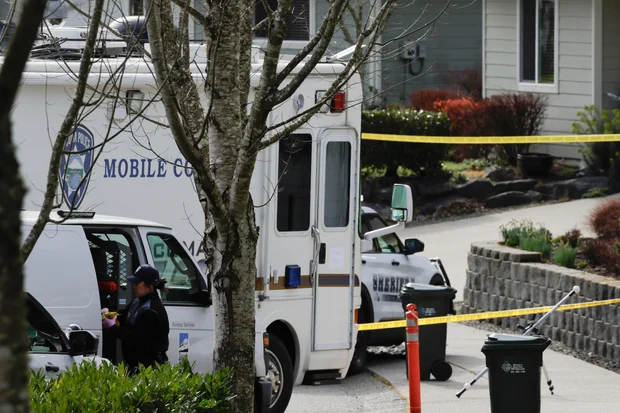
The police conducted synchronized raids on two residential addresses and confiscated laptops, mobile phones, and print maps. Forensic teams are now looking at the possibility of the suspects having made physical reconnaissance of the property of Starmer.
Charges and Legal Outlook
The charges against the defendants are now under the 1(1) of the Criminal Law Act 1977, which is conspiracy to commit arson with the aim of endangering life or property. On conviction, they may receive life imprisonment because under the laws of the United Kingdom, politically motivated arson is taken very seriously, particularly when it is perpetrated against people in a position of authority.
The prosecution is said to be planning to present the case that the so-called plot would have caused a significant threat to property, as well as to neighboring residents, in case it had been executed. Although such an attack did not occur, there is a legal implication in some legal contexts that even the mere attempt to organize an arson with political implications is a type of terrorism.
That is why, the observers of the law might expect that the Crown Prosecution Service can revise the terrorism-related charges according to Terrorism Act of 2000 based on the character of the evidence connected with the motive and ideological affiliation.
Political Security Implications
This case is a continuation of the series of events where Members of Parliament have been threatened or physically assaulted. The murder of Conservative MP David Amess in 2021 and the murder of Labour MP Jo Cox in 2016 are traumatic incidents to remind people of the fragility of public officials.
Even though no physical damage was done in the given case, the supposed goal to attack personal assets of the Prime Minister is an unpleasant indication of the shift of the online rhetoric towards actual planning. Analysts caution that these actions, even failed ones, can encourage imitative attempts or even urge those living on the margins to more extreme manifestations of political activism.

Freedom of Speech versus Criminal Act
The case is likely to spark the discussion again of what is legitimate dissent. In democratic nations, the citizens have the liberty to criticise their leaders, individuals who protest against policies and dissatisfaction. Nevertheless, in those cases when dissent includes conspiratorial violence whether in its planning or execution itself, it directly contradicts the rule of law.
Proponents of tough prosecution believe that setting timely action is critical since the delay of an act being executed can prove to be disastrous. On the other hand, the development of pre-emptive arrests on the grounds of intent interpretation is also being warned against by the advocates of civil liberties, particularly when the evidence is mostly digital or interpretative in nature.
Social and Social Political Response
To this day, the government has made a very brief statement of appreciation of the quick response by the law enforcement. The opposition personalities have not politicised the case, rather, demand a balanced approach, which safeguards the democratic role and integrity of the judicial system.
Remarkably, the response of the population seemed to be divided even outside the court. The so-called plan was viewed as a solitary act of lawlessness by some, and as the element of a bigger climate of rage against organizations by others. As one of the analysts, it has been observed that economic constraints, lack of trust in political leaderships and online polarisation have provided an environment in which radical ideas are spreading faster than ever.
What Comes Next
The trial will take place in later this year and more evidence will be brought before court as investigators complete their forensic reports. In case terrorism indictments are attached, the case can be heard with increased security, with limitations on the presence of the population.
Whichever will be the ultimate decision, the case is a wake-up call that political violence in Britain is no longer a far away thing that is only witnessed by isolated extremists. Instead, it has now taken the form of younger people, digital native networks and symbolic and not physically targeted attacks. Although arson of a vehicle or property cannot be compared with the attempts to assassinate a person, its symbolic meaning to threaten or punish a political power leads it to the very realm of a major national concern.
The case will probably be remembered not by the extent of the damage caused but by the question it will raise: how thin is the thin line between protest and extremism and how ready are Britain to face it before more serious consequences are manifested?