
Introduction
This shocking and also very tragic incident that happened is when a man shot his wife with an arrow and killed her in a heated domestic issue, and made one moment of anger a permanent loss. This shocking action has shaken the local society and has rekindled important debates on domestic violence – a secretive pandemic that has been taking lives unnoticed.
Domestic conflicts are seen to be personal issues, but when a temper gets out of control they may be the cause of mind-shattering violence. It is a bone-chilling example of how close to the edge of war and destruction one can be, and how the anger and mental stress, as well as the lack of emotional support, can ruin lives in their turn.
Background Information
Although all the details of this case are still in the process of police investigation, early reports are that the couple had been experiencing marital tension that had been in existence for a long time before the incident. According to the neighbors, there were frequent quarrels and emotional volatility in the relationship. They remembered angry verbal exchanges that sometimes turned violent – a bad omen that their quarrel was getting out of control.
Psychologists stress that domestic violence can hardly take place spontaneously. A history of behavioral control, verbal aggression, and emotional manipulation is often antecedent to it. These poisonous habits get normalized as time goes by in the house and provide a life-threatening atmosphere where fear and resentment take the place where trust and communication should have been.
Another disturbing element is the weapon of a bow and arrow. This weapon implies an abrupt, unthought-out burst of anger instead of a well-thought-out assault. It represents the point of intersection of opportunity, rage, and mental breakdown – a point where emotional saturation overshadowed reason.
Legal Implications
Homicide laws are the legal framework for such acts. Intent and evidence are some of the factors that determine whether the accused will be charged with murder or culpable homicide other than murder.
Should the act be established to be premeditated, i.e., the accused had planned or intentionally decided to kill, the charge would probably be that of murder, which is subject to the greatest penalty of life imprisonment or even the death penalty under the Bharatiya Nyaya Sanhita (BNS).
Nonetheless, when the investigators conclude that the act was committed due to an outburst of anger, or in other words, the crime of passion, the court will probably classify it as culpable homicide, which still recognizes the emotional disturbance, but punishes it harshly.
Such legal distinction indicates the complexity of the issues of domestic violence-related homicides: much of this is not thought through but is rather the result of emotional breakdown. However, the legal system has to find a balance between compassion and responsibility — that is, providing justice to the victim and understanding the psychological aspect of such offenses.
Statistics and Trends
Domestic violence is one of the most rampant crimes that is underreported worldwide.
UN Women has found that close to 1 out of 3 women across the world have experienced physical or sexual violence by a partner. In India, the National Crime Records Bureau (NCRB) has recorded data that thousands of cases of domestic violence are documented every year, with an alarming percentage of them turning into severe attacks or deaths.
Experts even think that the real figures are much higher because victims tend to be quiet due to social stigma, economic dependency, and fear of retaliation. There are still a lot of women who live in abusive relationships and have no escape path, as they are afraid of being judged by society.
Of concern is the increased number of crimes of passion, which are acts of violence perpetrated in an emotional state. Sociologists attribute this growth to city stress, unemployment, drug abuse, and degrading mental well-being. Although awareness campaigns and legal provisions like the Protection of Women from Domestic Violence Act (PWDVA) have enabled many victims to take a step forward, gaps in enforcement and the delay in intervening persist as obstacles toward actual improvements.
Expert Opinions
Mental health and criminology professionals can provide valuable information about getting an insight into such tragedies.
According to Dr. Nisha Kapoor, a clinical psychologist in family trauma, it can be explained as follows:
“Domestic violence takes its origins in emotional instability and unhealthy desire to control. Anger is the only way individuals pass the frustration of powerlessness or rejection. This anger may be transformed into deadly violence without any action.”
Criminologist Rajesh Bhatia says:
“Although the crime is criminal, the conditions that facilitate the crime, such as silence, shame, and denial, are also harmful. The social fabric that surrounds us does not always support the idea of people seeking help and portrays domestic conflict as a personal matter and not a red flag.”
Both specialists share the opinion that such tragedies can be avoided by early intervention and easy access to mental health care. Lives will be saved through counseling and awareness campaigns, as well as candid discussions on emotional regulation — but it takes the concerted effort of families, communities, and even authorities.
Case Analysis
The problem is that this is a tragic event that occurs in a natural progression of events.
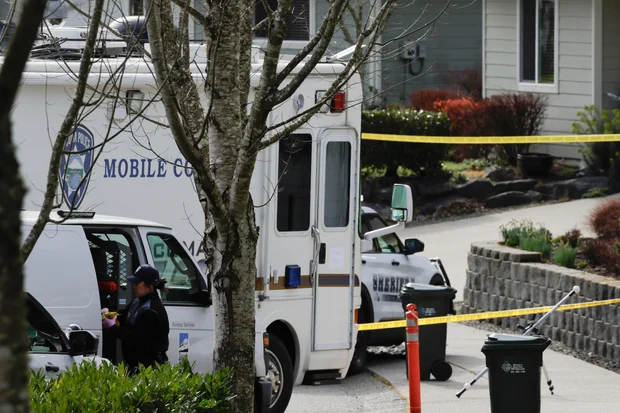
The relationship between the couple is said to have worsened with time, and this was due to emotional strain and inability to communicate. On the day of the crime, a heated argument went out of control. The husband grabbed a bow and arrow, which was either a hunting weapon or a traditional object, and, in a frenzied rage, killed his wife.
Witnesses testified that they heard screams, and then there was silence. Upon the arrival of the police, the victim was dead, and the suspect was visibly upset, apologizing for what he had done. His sorrow, though heartfelt, was too late.
Psychologically, the given act is a total emotional meltdown — a climax of anger, helplessness, and uncontrollable stress. It also displays structural ineffectiveness: there is no emotional sensitivity, there is no access to professional counseling, and there are no mechanisms in society to defuse domestic tensions before they result in fatal outcomes.
To the family and the society of the victim, the consequences are intolerable. Not only has the crime left grief, but it has also brought about stigma and unanswered questions. And how would such a tragedy be possible in a home that was full of love?
Conclusion
This heartbreaking case exposes the hidden dangers of untreated domestic conflict. It underscores that violence rarely occurs without warning — it grows quietly through neglect, silence, and fear until it explodes.
Society must stop treating domestic disputes as private matters and recognize them as public health and safety issues. Early intervention through counseling, legal protection, and community education is essential. Law enforcement must work closely with psychologists and social workers to identify red flags and prevent escalation.
Every domestic violence survivor deserves safety and justice. Every family deserves emotional support before conflict turns into catastrophe.
Resources: Support and Help
If you or someone you know is experiencing domestic violence or emotional abuse, reach out to:
- India Helpline (181) – National Women’s Helpline
- Police Emergency (112) – For immediate danger
- National Commission for Women (NCW): ncw.nic.in
- AASRA Helpline: +91-9820466726 – Mental health & crisis intervention
- Snehi: +91-9582208181 – 24-hour emotional support
Final Note
Domestic violence knows no boundaries — it affects families of every class, culture, and background.
The tragic case of a husband shooting his wife with an arrow is not just a crime — it’s a warning.
It reminds us that anger, when left unchecked, becomes destruction; and silence, when accepted, becomes complicity.
It’s time to listen, intervene, and care — before another moment of rage ends another innocent life.