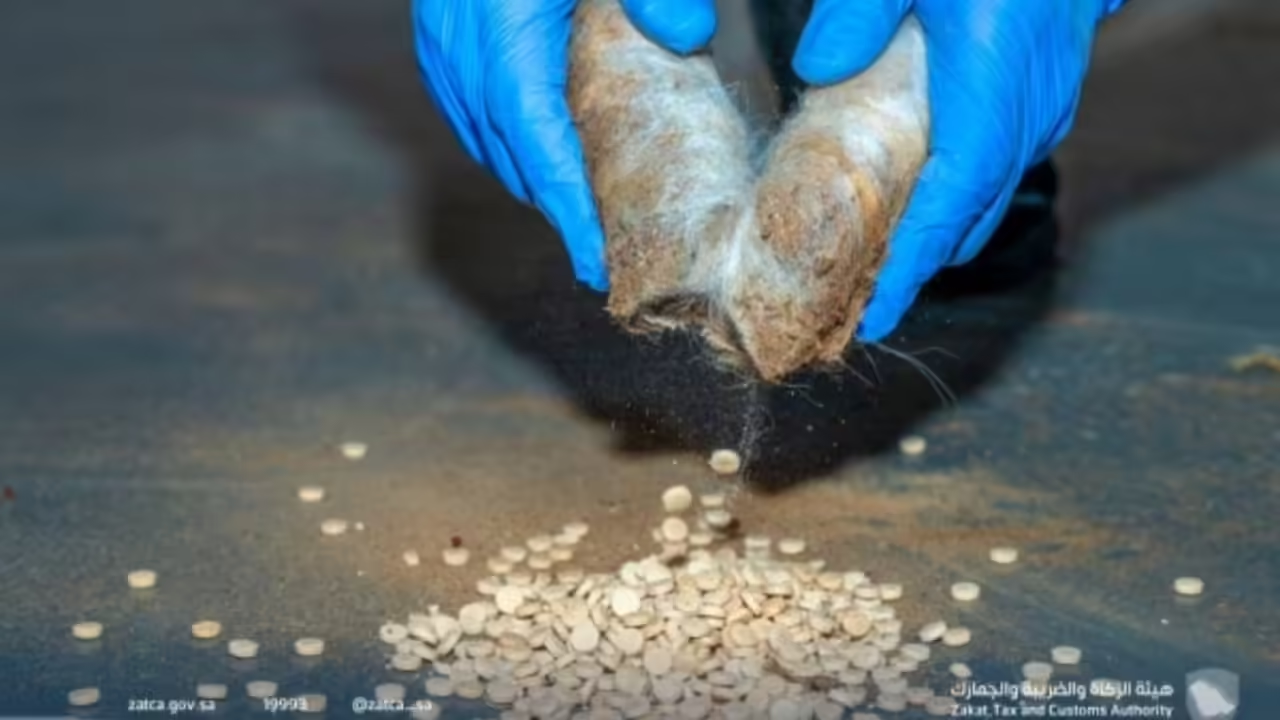
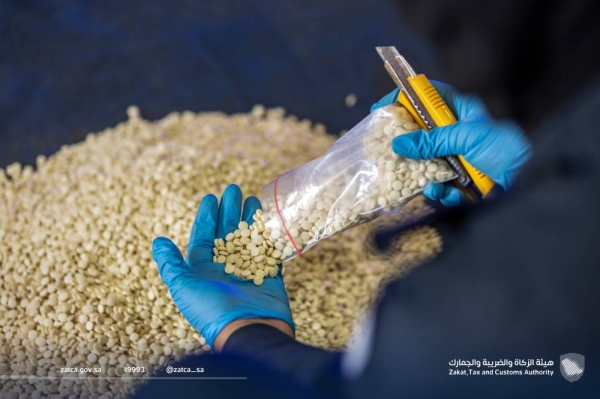
The bales looked ordinary at first—just another routine shipment of sheep wool entering Saudi Arabia through the Haditha border crossing from Jordan. But when a customs officer noticed an unusual density in one bundle, he ordered it to be scanned. What appeared harmless on the outside lit up like a beacon under X-ray. Seconds later, officers began tearing open the wool sacks by hand. Hidden beneath layers of tightly packed fleece were thousands of small white tablets—suspiciously uniform, stamped, and unmistakable. The count? 406,400 Captagon pills, one of the largest narcotics seizures at that checkpoint in recent years.
What should have been livestock cargo had been transformed into a sophisticated drug mule.
The Seizure at Haditha: A Disguised Fortress of Wool
According to customs officials, the traffickers had meticulously hollowed out sections of wool bundles, refilling them with compressed packets of pills before sealing them back in place to avoid detection. The operation relied on the natural density and chaotic structure of wool—perfect for masking the shapes and signatures of concealed items. Had it passed unchecked, the shipment would likely have been distributed across multiple provinces within hours.
Authorities believe the contraband was intended for the Saudi underground market, where demand for stimulant drugs remains a persistent issue despite harsh penalties.
What Is Captagon — and Why Is It So Dangerous?
Captagon, scientifically known as fenethylline, is an illegal amphetamine-based stimulant notorious across the Middle East. In its earliest form, it was once prescribed medically for attention disorders. Today, it is widely manufactured in clandestine labs across conflict zones—particularly in Syria, Lebanon, and parts of Iraq—before being funneled into Gulf countries.
Nicknamed “the fighter’s drug,” Captagon is often associated with combatants who use it for heightened alertness and aggression. It keeps users awake for extended periods and suppresses fatigue, but its long-term effects include addiction, paranoia, and severe neurological damage.
Saudi officials warn that Captagon is not just a recreational drug—it is a tool of financing for armed groups and transnational criminal syndicates.
Lone Smuggler or Global Trafficking Syndicate?
While the individual transporter of the shipment has not yet been named, investigators suspect that the seizure is part of a much larger network. Similar methods—using agricultural goods, construction materials, and even fruit crates—have been documented in previous attempts to smuggle Captagon into Saudi territories.
Regional law enforcement agencies believe that organized groups use layered courier strategies, meaning the driver may have no knowledge of the larger operation. Senior customs officials hinted that cross-border coordination between Saudi Arabia and Jordanian intelligence is currently underway to trace the origin of the shipment.
Government Response: Zero Tolerance, High Stakes
Saudi Arabia has one of the strictest anti-drug policies in the world, with major trafficking offenses punishable by life imprisonment or execution. In recent years, several foreign nationals convicted of large-scale drug smuggling have been executed following court rulings.
In a statement released after the seizure, Saudi Customs reaffirmed its stance:
“The Kingdom will not tolerate those who attempt to poison its society. Every entry point—land, sea, or air—is fortified with advanced technology and trained personnel.”
The statement also called for stronger cooperation between Gulf nations and international anti-trafficking agencies to disrupt what officials referred to as “industrial drug enterprises.”
Public and International Reaction
News of the seizure sparked widespread praise across Saudi social media, with citizens applauding border officials for their vigilance. However, many also expressed concern at how creative smugglers have become—if drugs can be hidden in wool, what might be next?
Security analysts echoed this sentiment, warning that as detection improves, criminal innovation escalates. Some experts have called for increased AI-driven cargo monitoring and biometric tracking of repeat offenders at border posts.
The Larger Battle — and a Critical Call to Awareness
This incident is not an isolated triumph—it is a reminder of a persistent threat. While Saudi Arabia continues to tighten its borders, drug networks remain relentless, adapting with alarming speed.
The smuggling of 406,400 Captagon tablets inside sheep wool was not just a crime—it was a calculated assault on public health and national security. If even one shipment of this scale slips through, thousands of tablets could reach schools, workplaces, and streets within days.
The message is clear: Border vigilance alone is not enough.
Stronger international data sharing, real-time cargo profiling, and targeted financial investigations are essential to dismantle the networks behind these shipments.
Until then, every bale of wool, every crate of fruit, every sealed shipment could carry more than it claims.
In today’s world, even ordinary cargo demands suspicion.
Frequently Asked Questions (FAQ)
1. What is Captagon and why is it dangerous?
Captagon is an illegal stimulant drug that increases alertness and suppresses fatigue. It is highly addictive and can cause long-term psychological and neurological damage.
2. Where is Captagon produced?
Most Captagon is believed to be produced in clandestine labs across Syria and Lebanon, then trafficked through neighboring countries.
3. Why is Captagon called “the fighter’s drug”?
Because it has reportedly been used by combatants and militants to stay awake for long hours, reduce fear, and increase aggression during conflict.
4. How was Captagon hidden in wool bundles?
Traffickers hollowed out sections of wool bales, inserted sealed drug packets, then repacked and reshaped the wool to appear untouched.
5. What are the penalties for drug trafficking in Saudi Arabia?
Major drug trafficking offenses in Saudi Arabia can lead to life imprisonment or capital punishment, depending on the severity of the case.
6. How is Saudi Arabia improving drug detection?
Authorities are now pushing for AI-based cargo scanning, international intelligence sharing, and financial tracing of drug networks to stop such attempts before they reach the border.