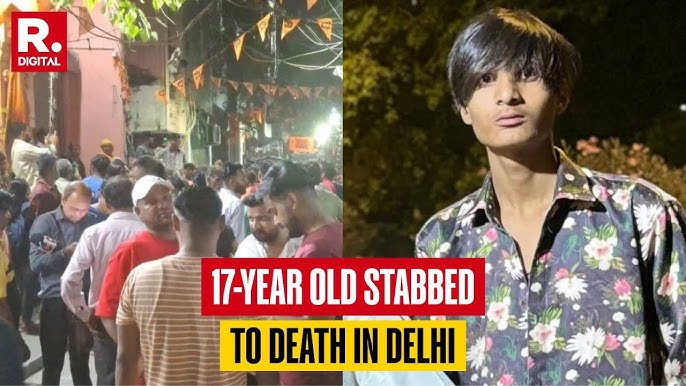
New Delhi’s Seelampur neighborhood is no stranger to headlines. Known for its bustling lanes, teeming markets, and crowded by-lanes where daily life plays out in rapid rhythm, the locality has often carried the reputation of being “rough but resilient.” But in late September 2025, that resilience was tested by a crime so shocking that it jolted the capital city’s conscience: the cold-blooded murder of a 12-year-old boy, allegedly at the hands of another minor.
A Normal Evening Turned Nightmare
It was just another late afternoon in Seelampur. Children were playing cricket in narrow alleys, shopkeepers were calling out to customers, and the aroma of sizzling street food wafted through the air. Among those children was the victim, a boy described by neighbors as quiet, obedient, and fond of kabaddi and video games. His parents, migrant workers, had labored to keep him in school, hopeful that education would steer him toward a brighter future.
But by dusk, that future was cruelly extinguished. The boy was found fatally stabbed, his small frame lifeless, abandoned in a dark corner of the neighborhood.
The Sinister Twist: A Minor as the Suspect
As word spread, disbelief turned into fury. Who could harm a child? The answer shocked even the police: the primary suspect was another boy, himself a minor. Early investigations revealed that the murder stemmed not from a gang feud or robbery, but a petty quarrel—one that escalated into unimaginable brutality.
Investigators believe a heated argument between the two boys spiraled out of control. The accused allegedly produced a knife—possibly carried to “show off” to peers—and in a sudden outburst, stabbed the victim multiple times. Panic followed. The attacker fled, leaving the bloodied body behind.
A Neighborhood in Shock
When police sirens pierced Seelampur’s night, hundreds of residents crowded the spot. Mothers clutched their children tighter, fathers shook their heads in grim silence. “This is not just a crime, it’s a warning,” muttered one shopkeeper. “If children are killing children, what kind of society are we building?”
The family of the victim was inconsolable. His mother wept uncontrollably, while his father, a rickshaw puller, demanded justice: “I broke my back to give him a chance in life. And now I must carry his body instead of seeing him carry my name forward.”
The Police Investigation
Delhi Police moved swiftly. Within hours, they had pieced together CCTV footage and eyewitness accounts that pointed toward the accused. By the next day, officers had apprehended the minor, recovering the knife allegedly used in the attack.
Officials stressed that while the accused is underage, the brutality of the act raises difficult questions about whether juvenile justice provisions are enough to address such heinous crimes. “We must balance compassion with accountability,” one senior officer noted. “A child may have committed the crime, but another child has lost his life forever.”

Fear and Questions in Delhi
This single act of violence ignited a broader debate across Delhi. Parents whispered anxiously outside schools, teachers discussed discipline and moral education, and community leaders called for stronger interventions to guide young minds.
Was this simply an isolated tragedy? Or a symptom of deeper social rot—poverty, lack of supervision, the easy availability of weapons, and the influence of street culture that glorifies violence?
Experts point to a growing trend: minors caught with knives, gangs using teenagers as pawns, and disputes among children escalating into stabbings. In many low-income neighborhoods, children are exposed to crime early, sometimes normalizing it as a survival tool.
Media Frenzy and Public Outcry
The murder made front-page headlines and dominated news channels. Social media blazed with outrage, with hashtags like #JusticeForSeelampurBoy trending overnight. Some demanded that the accused be tried as an adult, while others argued for rehabilitation over retribution.
Celebrities and politicians weighed in, adding fuel to the storm. The Delhi government pledged more street lighting, youth counseling, and tighter enforcement on the sale of knives. Yet, for many, these promises felt too little, too late.
A Broader Pattern of Juvenile Crime?
This wasn’t the first juvenile crime to shake Delhi. In previous years, cases of minors involved in robberies, assaults, and even murders have surfaced. NCRB (National Crime Records Bureau) statistics show a troubling rise in crimes committed by teenagers, especially in urban slums. Many stem from petty disputes, peer pressure, or the lure of quick money.
Criminologists warn that without early intervention—counseling, education, recreational opportunities, and community policing—the cycle may only worsen. “”Children cannot be overlooked until they fall into crime; early attention is essential.” said Dr. Ananya Sharma, a child psychologist. “We must catch them before crime does.”
The Funeral: A Community in Mourning
The boy’s funeral was held in Seelampur itself, attended by hundreds. The sight of a small coffin being lowered into the ground left many sobbing openly. Friends from school brought flowers; neighbors lit candles in vigil. His teacher described him as “a boy who loved to draw and dreamed of becoming a police officer.” That dream now lies buried, a haunting symbol of what was lost.
Justice, But at What Cost?
The juvenile accused now faces proceedings in the Juvenile Justice Board. If convicted, he may spend years in a correctional home but cannot be sentenced as an adult unless the case is transferred under special provisions.
For the victim’s family, however, no sentence feels adequate. “He took my child,” the mother cried. “What correction will bring back my son?”
Conclusion: A Lesson in Blood
The Seelampur murder is more than just a crime story—it is a mirror reflecting society’s failures. A child’s life cut short, another child branded a killer, and a community left scarred. It forces Delhi, and India at large, to confront a painful question: are we protecting our children from violence, or are we raising them in its shadow?
As night falls again in Seelampur, parents call their children home earlier, the streets grow quieter, and whispers of fear still hang in the air. For one family, silence is permanent—the silence of a boy who will never return.